
Zombie cells have officially escaped the realm of sci-fi metaphors and become one of the hottest targets in real-world aging research, and scientists now think a single immune “off switch” called EP2 might be helping those cellular undead pile up across the body. A new wave of studies suggests that tweaking this receptor on the immune system’s garbage collectors could rejuvenate multiple organs at once, pushing the idea of “immune-based anti-aging” from speculation into lab-tested reality.
The villain in this story is the senescent cell, a damaged cell that stops dividing but refuses to die, lingering in tissues and blasting out inflammatory signals known as the senescence-associated secretory phenotype (SASP). In short bursts this state can be useful, helping with wound healing and calling in immune cells for repair, but over time a growing population of senescent cells drives chronic inflammation, tissue dysfunction, and age-related diseases ranging from heart problems to dementia. Under normal conditions, immune cells called macrophages patrol tissues and perform efferocytosis—the cleanup of dead and dying cells tagged with “eat me” signals—but that system grows sluggish with age, allowing zombie cells and other debris to accumulate.
One strategy to deal with this backlog is to nuke the zombies directly using senolytic drugs, compounds that selectively push senescent cells into programmed cell death while sparing most healthy cells. Combinations like dasatinib and quercetin have shown in animal models that clearing senescent cells can reduce inflammation and improve tissue function, feeding hopes for a new class of longevity therapies. Yet even as senolytics advance, researchers have been wrestling with a deeper question: why does the aging immune system stop handling this job on its own, and can its trash-collecting powers be restored instead of merely bypassed?
That’s where EP2 comes in. Recent work published in Science points to tissue-resident macrophages—long-lived immune cells embedded in organs—as key coordinators of age-related decline because their ability to engulf senescent neutrophils collapses over time. In aged mice, these macrophages ramp up expression of the prostaglandin E2 receptor EP2, a change that pushes them into an energy-depleted, pro-inflammatory state and leaves senescent neutrophils to accumulate. When researchers genetically deleted EP2 or blocked it pharmacologically, the macrophages regained their efferocytosis skills, senescent cells dropped, and multiple organs—including brain, heart, skeletal muscle, liver, and kidney—showed more youthful inflammation patterns and improved function. On measures like memory, frailty, muscle strength, and cardiac performance, old mice with EP2 switched off looked strikingly similar to their younger counterparts.
This breakthrough builds on earlier work showing EP2 as a kind of master dial linking aging, metabolism, and inflammation in myeloid cells. Studies by Minhas and colleagues found that EP2 levels climb in aged microglia and macrophages, rewiring their glucose use toward glycogen storage, choking mitochondrial respiration, and locking them into a harmful inflammatory mode that contributes to cognitive decline. Separate research in the lungs revealed that age-induced overproduction of prostaglandin E2, acting through EP2, compromises the fitness and proliferation of alveolar macrophages and increases mortality after influenza infection—another example of immune garbage trucks breaking down just when they’re most needed. Together, these findings have turned EP2 inhibition into a serious drug-development target, with medicinal chemistry papers now openly weighing the strengths and risks of designing EP2-blocking therapies for neurodegeneration, cancer, and aging-related inflammation.
For longevity researchers like Oxford immunologist Roel de Maeyer, this EP2 story fits neatly into a broader push to rejuvenate the immune system rather than simply blasting away symptoms of aging. The idea is that if macrophages and other immune cells can be nudged back into a youthful state—efficiently clearing senescent cells and infectious threats—many age-related problems could ease simultaneously, potentially keeping older people healthier and out of hospitals for longer. At the same time, scientists stress that these results are in mice and human cells, not yet in human anti-aging drugs, and senescent cells can play beneficial roles in wound repair and tumor suppression, so indiscriminately erasing them or permanently disabling EP2 could carry risks. Still, the notion that a single immune switch might coordinate organ-wide aging has given the field a tantalizing new quest: instead of just slaying zombie cells, can medicine upgrade the body’s natural cleanup crew and keep those zombies from rising in the first place?
Image Credits
In-Article Image Credits
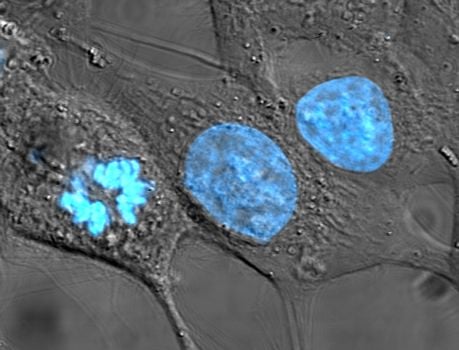
Human cancer cells, specifically HeLa cells, with DNA stained blue and cyan. The central and rightmost cell are in interphase. The cell on the left is going through mitosis and its chromosomes have condensed. via Wikimedia Commons by TenOfAllTrades with usage type - Public DomainFeatured Image Credit
Human cancer cells, specifically HeLa cells, with DNA stained blue and cyan. The central and rightmost cell are in interphase. The cell on the left is going through mitosis and its chromosomes have condensed. via Wikimedia Commons by TenOfAllTrades with usage type - Public Domain


