

Astronomers have found a planet outside of our solar system that is the same size as Earth. It is called LP 791-18 d and the scientists believe it may have volcanoes on its surface.
As science enthusiasts ourselves, we understand the importance of staying up-to-date with the latest developments in science. That’s why we bring you the latest discoveries, innovations, and advancements in the world of science, keeping you informed and up-to-date on the latest trends and breakthroughs.
Astronomers have found a planet outside of our solar system that is the same size as Earth. It is called LP 791-18 d and the scientists believe it may have volcanoes on its surface.
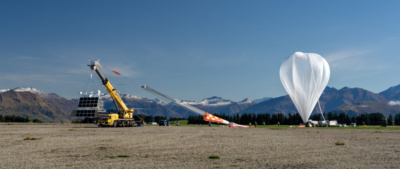
NASA’s second super pressure balloon (SPB) carrying EUSO-2 had a successful launch today and was in flight for more than 24 hours. However, it developed a leak, and as a safety measure, flight controllers decided to terminate the flight over the Pacific Ocean, near New Zealand.

Water on Comet 238P in place where it seems it shouldn’t be Researchers have made a major discovery about the origins of Earth’s water, using NASA’s James Webb Space Telescope. The telescope’s NIRSpec tool has confirmed that water vapor is present around a comet in the main asteroid belt, suggesting that water ice from the…

These findings imply that exposure to trichloroethylene in water may increase the risk of Parkinson’s disease, which is a concern worldwide due to the widespread presence of this environmental contaminant.

It may come as a shock to you but some of the food that we eat is radioactive. Bananas are one such food. They contain about 450mg of potassium, some of which is potassium-40 which is, you heard it here first, radioactive. In fact, 50 bananas are about as radioactive as a dental x-ray.

Building a solar balloon is a fun and educational activity for anyone interested in science and engineering. It is a type of hot air balloon that uses the sun’s energy to heat the air inside the balloon, lower the air’s density, and causing it to rise.

A recent study conducted by researchers at Cima University of Navarra in Spain has found that the inhalation of menthol can enhance cognitive ability in animal models. The study revealed that repeated short exposures to menthol can help regulate the immune system and prevent cognitive decline, a common symptom of the neurodegenerative disease, Alzheimer’s. The…
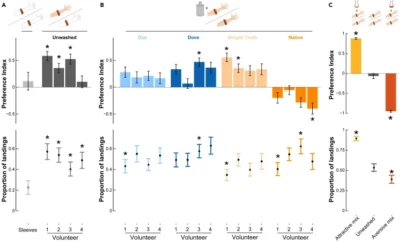
Have you ever wondered why some people seem to attract mosquitoes while others don’t? Well, a team of researchers from Virginia Tech recently discovered that certain soaps can actually make you more attractive or repellent to mosquitoes, depending on your unique odor profile.

In the 1920s, Edwin Hubble made a groundbreaking discovery while observing distant galaxies: the universe is expanding. However, it wasn’t until 1998 that the observation of Type Ia supernovae led to the further discovery that the universe is not just expanding, but also experiencing accelerated expansion. Astrophysicist Joe Mohr from LMU explains that to account…

A team of researchers from Baidu Research recently developed an AI algorithm that can quickly design highly stable COVID-19 mRNA vaccine sequences, even when they were previously unattainable. The algorithm, called LinearDesign, represents a significant breakthrough in both stability and efficacy for vaccine sequences, achieving a 128-fold increase in the COVID-19 vaccine’s antibody response.
SparTech Software Cybersecurity
Check out the latest cybersecurity and dark web news. From rapid, high-level cybersecurity analysis reports to in-depth penetration testing (pentesting) of your network and systems, SparTech Software offers a comprehensive suite of cybersecurity services designed to protect your organization from evolving digital threats.

Geeky mathematical minds make money with horse race handicapping! Visit pickpony.com for horse racing past performance sheets, race charts and heatmaps, data summaries, AI analysis, and more. Pick Pony - your best bet in horse racing!
Books from Geek Slop Publishing
Living Truth Bible Study Guides
Despite its beautiful prose, you can’t just read Revelation; it requires diligent study. However, ineffective study techniques can lead to misunderstandings. Rather than imposing strict interpretations on the described events, use the concepts we present as a framework for understanding its intricate code. The Book of Revelation indeed provides more than just a foretelling of the tumultuous end of days. It reassures Christians that divine justice will ultimately triumph over evil and promises Jesus' eventual return as the rightful king of the world.
Chronicles of Enigma
While science and reason often seek to illuminate the unknown, there remains a certain allure in the unexplained—a realm where imagination and reality blur, creating a tapestry rich with wonder and possibility. Stories from the Chronicles of Enigma series endure not just as relics of the past, but as gateways to exploring the depths of our curiosity and the infinite potential of our world. Let us be the light that guides you through the darkness.
This Month’s Charity
Geek Slop believes everyone should be a good corporate citizen. Thus, each month, Geek Slop gives a portion of our online store profits to deserving charity. This month’s charity is:
Child Fund of America
Charity Watch Grade: A+
Program percentage: 92%
©Geek Slop – Many images, trademarks, logos, video, brands and images used on this website are registered trademarks of their respective companies and owners. They want us to remind you that “All Rights are Reserved”. Geek Slop never shares its data with third parties. However, 3rd party apps used on this site (we’re talking about you, Google!) may share your data in a non-identifying manner for reasons we do not know (probably to take over the world). Some content is sourced by fans, online websites, and or other fan community sources. Geek Slop is not responsible for reporting errors, inaccuracies, omissions, and or other liabilities related to news shared here. Entertainment is afast-movingg industry but we do our best to keep tabs on infringements. If some of your content was shared by accident, contact us about any infringements right away.


