
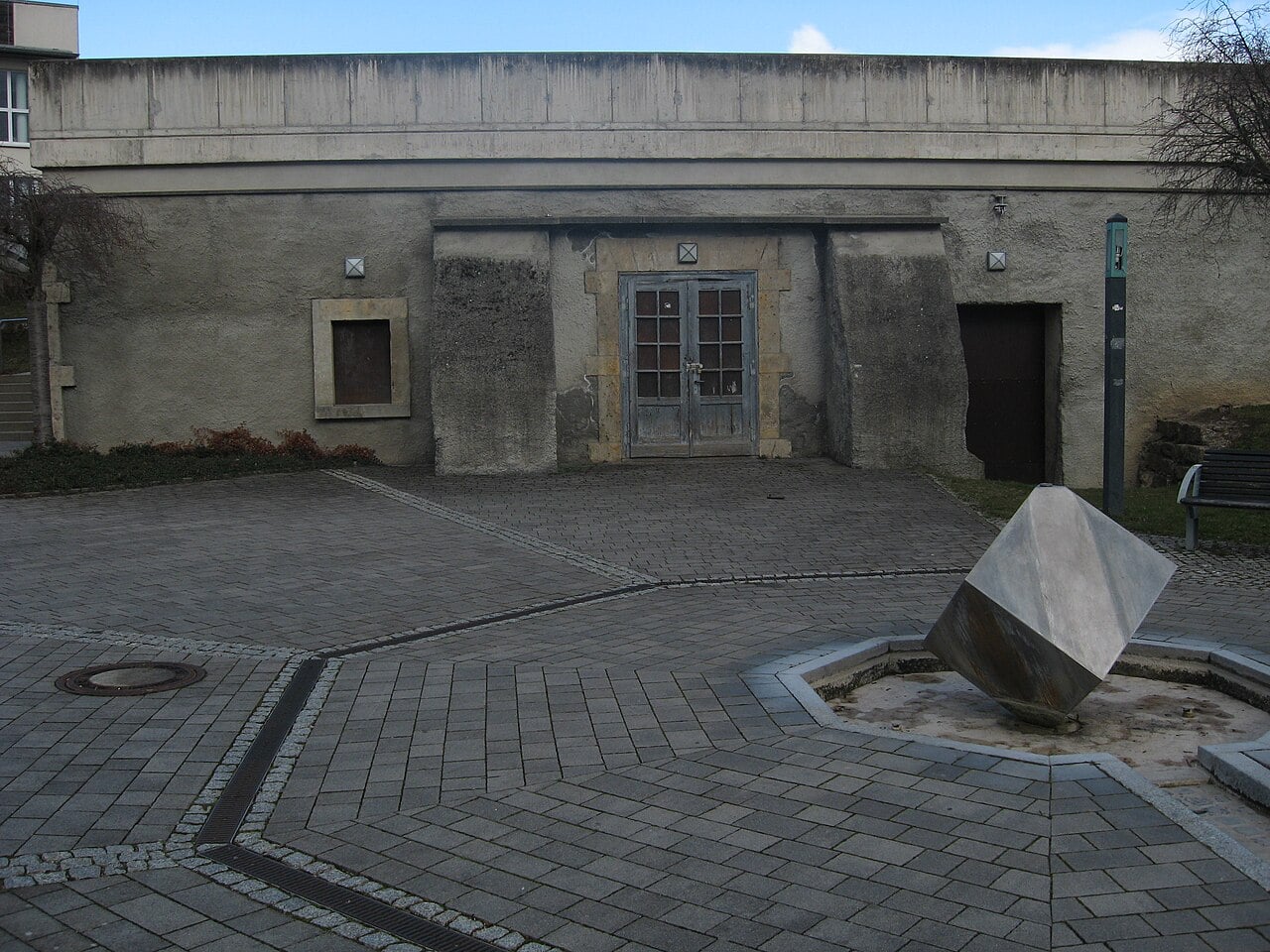
New research has sharply revised the story of Nazi Germany’s wartime nuclear effort: the country’s final reactor experiment was not a near miss, but a project missing the materials needed to sustain a chain reaction. The findings, reported by ScienceDaily, come from an investigation of surviving uranium cubes, wartime records, technical reports, and computer modeling.
The device at the center of the study was the B8 pile, assembled in 1945 under physicist Werner Heisenberg’s direction. Its unusual design suspended 664 five-centimeter cubes of natural uranium in approximately 1,400 liters of heavy water, which slows neutrons and helps maintain the conditions needed for fission. The experiment was dismantled after Allied forces reached the site, before it ever achieved a self-sustaining reaction. The researchers’ PNAS Nexus paper identifies B8 as the culmination of Germany’s wartime reactor program.
That conclusion challenges the postwar account that B8 was only slightly short of working. A team led by Timothy Koeth reconstructed the reactor’s likely performance using two surviving uranium cubes alongside archival evidence. Their calculations put the reactor’s neutron multiplication factor below the threshold required for criticality: each generation of neutrons was too small to keep the reaction going. Depending on the proposed configuration, B8 would have needed roughly 1,292 to 1,775 cubes and about 2,966 to 3,411 liters of heavy water—far beyond what the experiment contained.
The resource problem was especially damaging. The study concludes that B8 required about twice its actual uranium inventory and more than twice its heavy-water supply to become operational. That was not merely an engineering setback: the additional heavy water would have exceeded the amount produced by Norsk Hydro during the entire war, while Germany’s broader uranium inventory was also insufficient for the proposed reactor designs. EurekAlert’s summary of the research notes that the analysis combined the surviving cubes with historical and industrial records.
The result also narrows the already-disputed question of how close Nazi Germany came to an atomic bomb. A working reactor would not itself have produced a weapon, but it could have supplied a route toward plutonium and demonstrated a crucial industrial capability. Instead, the B8 evidence points to a program constrained by scarce materials, wartime disruption, competing reactor designs, and limited time. As Science reports, the surviving cubes now provide a physical check on historical claims that once made Germany’s nuclear effort appear much more advanced.
Only a small fraction of the uranium cubes used by Germany’s wartime program have been located, making each surviving piece a kind of nuclear-archaeology artifact. Koeth’s earlier work tracing one such cube helped establish how these objects survived and circulated after the war; the new analysis turns them from curiosities into evidence against the idea that Heisenberg’s team was on the verge of success. The B8 story is therefore less a tale of a bomb narrowly missed than a reminder that nuclear projects depend on enormous, measurable supply chains—not just brilliant theory. The University of Maryland’s profile of Koeth describes the continuing effort to trace the project’s surviving uranium.
Image Credits
In-Article Image Credits
Nazi nuclear program - Museum Nazi-Atomreaktor via Wikimedia Commons by Giorno2 with usage type - Creative Commons LicenseFeatured Image Credit
Nazi nuclear program - Museum Nazi-Atomreaktor via Wikimedia Commons by Giorno2 with usage type - Creative Commons License


