
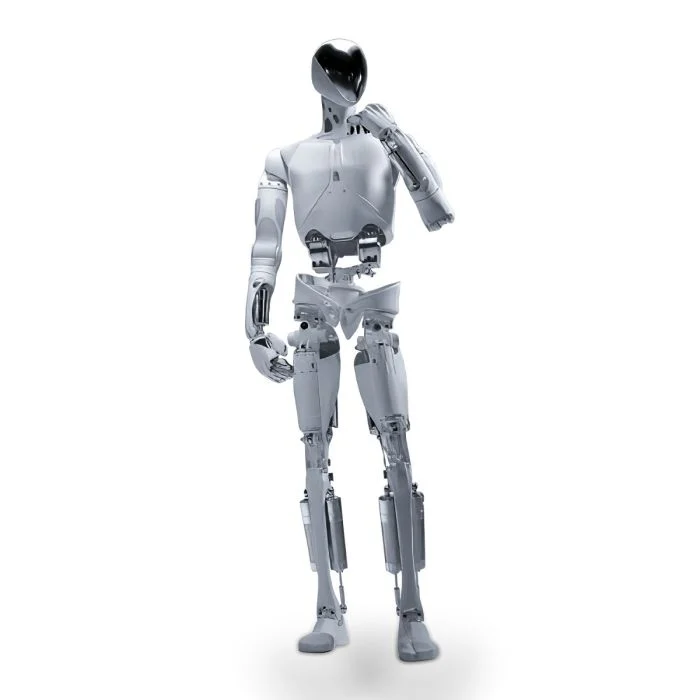
Chinese EV maker XPeng just turned a sci-fi sight gag into a real-world flex: its IRON humanoid robot reportedly walked straight out from final assembly and went to collect a staff badge as soon as it was bolted together, a moment first highlighted in coverage from Engadget. The company is framing the stunt as a proof-of-concept for its broader “Physical AI” push, where robots aren’t just lab demos but fully fledged co-workers the minute they leave the factory floor.
The walk-out coincided with XPeng switching on what it describes as the world’s first automated production line for advanced, general-purpose humanoid robots, with more than 80 percent of core manufacturing processes handled by machines. According to multiple reports, the first IRON unit completed automated final assembly, stepped off the conveyor under its own power, and navigated the shop floor without any remote operator or safety tether. XPeng has released video clips of the demonstration, which show a full-size humanoid emerging from the line and moving with enough confidence to pass for a junior employee on day one.
Under the glossy reveal, IRON is a seriously specced machine. XPeng says the robot is built around a fully enclosed flexible lattice “skin” designed to look human-adjacent while protecting both the hardware and the people around it. The chassis packs 76 degrees of freedom across its body and 21 in each hand, giving IRON far more dexterity than most current factory bots and enough joint articulation for tasks like shelving, packing, or basic tool handling. On the brain side, XPeng is using three in-house Turing AI chips that together deliver up to 2,250 TOPS of computing power, enough to run the company’s Physical AI foundation model directly on the robot for low-latency decision-making and on-device learning.
XPeng has been telegraphing this move for months, positioning IRON as a pillar of its strategy to translate the autonomy tech it developed for smart EVs into full-blown humanoids. Its dedicated robotics arm recently raised around $900 million at a multibillion-dollar valuation, a funding round explicitly tied to getting IRON out of the prototype stage and into real deployments. The roadmap laid out by XPeng and echoed in industry coverage points to mass production ramping by the end of 2026, with early IRON units working in XPeng showrooms and corporate campuses before wider commercial deliveries in China and overseas markets starting in 2027.
All of this drops into a fierce humanoid arms race where Tesla’s Optimus, Figure’s humanoids, and Agility Robotics’ Digit are vying to be the first robots to clock in next to human staff. XPeng’s pitch is that IRON is not just a flashy demo but a “high-level, general-purpose” humanoid that can come off a production line fully assembled, boot up its AI stack, and immediately begin tasks without teleoperation—something the company and several observers describe as a first for this class of machine. At the same time, analysts note that XPeng’s claims are partly marketing framing in a fast-moving field, and the real test will be how IRON performs outside controlled factory and showroom environments.
For now, XPeng is leaning into the theatrics of a robot casually strolling out to get its own employee badge, but the implications are much bigger than a viral clip. If IRON hits its production and deployment targets, XPeng could end up with fleets of humanoids stocking shelves, guiding customers through EV features, or handling logistics in back rooms before rolling into third-party factories and public venues. That prospect raises familiar questions about labor, safety, and regulation, but it also nudges geek culture’s long-running fascination with android co-workers a step closer to the everyday—this time, with a robot that literally walks off the line ready to start its shift.


