
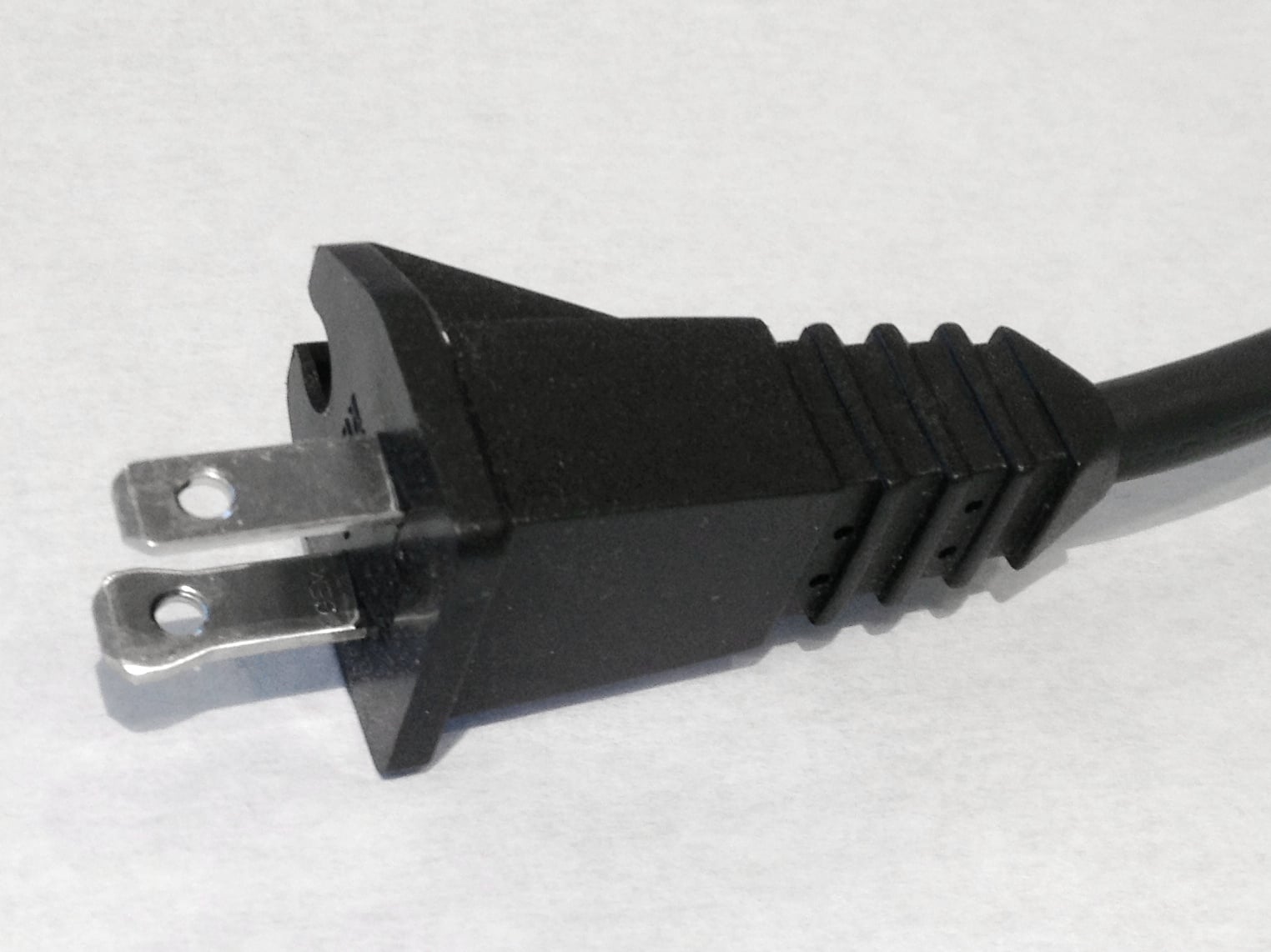
Those tiny holes near the tips of many electrical plug prongs look too deliberate to be meaningless. They are not there to carry extra electricity, and they are not a secret universal feature. Instead, the openings are a leftover from an older outlet design, while still offering manufacturers a useful way to handle and assemble the metal blades. The familiar plug-prong holes have a surprisingly practical history.
Early receptacles could include small raised detents inside the slots. When a plug was pushed in, those bumps seated in the holes and gave the connection a firmer hold. The arrangement helped keep a cord from gradually working loose under its own weight, while also improving contact between the outlet and the blade. Modern outlets generally rely on spring pressure and friction instead, so that locking feature is no longer essential.
The holes remain useful on the factory floor, however. During production, an alignment rod can pass through the blades to hold them in the correct position while insulating plastic is molded around the assembly. That makes the openings a convenient manufacturing aid even when the receptacle itself never uses them. It also explains why nearly identical plugs can differ: under U.S. National Electrical Manufacturers Association specifications, the hole is optional rather than a mandatory electrical feature.
That distinction matters because the hole does not change how the plug delivers power. On a standard U.S. two-prong connector, one blade is hot and the other is neutral; on a three-prong connector, the rounded ground pin provides a path intended to reduce shock risk if a fault energizes an appliance’s metal case. The U.S. Department of Energy identifies that grounding connection as an important protection, but the small openings in the flat blades are not part of that circuit.
The openings can have a limited safety role outside normal operation, too. A tag, bar, or other lockout device may be passed through them to help prevent a plug from being inserted while equipment is being serviced. That is a separate use from the historical outlet detent, and neither function means consumers should insert objects into an energized plug or outlet.
So the short answer is wonderfully unglamorous: plug-prong holes are a design remnant that once helped outlets grip plugs, remain handy during manufacturing, and can support certain lockout practices. Their continued presence is less evidence of hidden electrical engineering than of a familiar industrial truth—old features often survive because removing them would provide little benefit.
Image Credits
In-Article Image Credits
A polarized NEMA-1 plug on an electric drill via Wikimedia Commons by ArnoldReinhold with usage type - Creative Commons License. By ArnoldReinhold - Own work, CC BY-SA 3.0, https://commons.wikimedia.org/w/index.php?curid=35142486Featured Image Credit
A polarized NEMA-1 plug on an electric drill via Wikimedia Commons by ArnoldReinhold with usage type - Creative Commons License. By ArnoldReinhold - Own work, CC BY-SA 3.0, https://commons.wikimedia.org/w/index.php?curid=35142486


