
Rural highways may look like ecological dead zones, but a new study led by the University of Ottawa says they can become pollinator hotspots with surprisingly small tweaks to maintenance routines.
As first reported by science outlet Phys.org, researchers found that dialing back mowing and replacing blanket herbicide applications with targeted spraying along rural roadsides produced a roughly 45% increase in pollinator numbers and a 23% bump in species richness compared with conventionally managed sites. The uOttawa team focused on bees and flower flies, two groups that play outsized roles in keeping both wild ecosystems and farm fields humming. Their low-intensity regime wasn’t a radical rewilding experiment; it mainly meant mowing less often and using herbicide with more precision rather than across entire rights-of-way.
Roadsides might not scream “wildlife habitat” to the average driver, but ecologists increasingly view them as linear corridors that can stitch together fragmented landscapes for insects and other small species. The new findings line up closely with long-standing guidance from conservation groups such as the Xerces Society, which has shown that roadsides planted with native grasses and wildflowers support more bees and butterflies than strips dominated by non-native plants. Xerces recommends mowing beyond the shoulder only once a year, ideally in the dormant season, and avoiding blanket herbicide treatments that wipe out the very flowers pollinators depend on.
Transportation agencies have been inching toward this “mow less, manage smarter” philosophy for years, and the uOttawa data gives them fresh empirical ammo. The U.S. Federal Highway Administration’s best management practices for pollinators highlight reduced mowing outside the clear safety zone, higher mowing heights, and lower mowing frequency as ways to cut butterfly mortality while increasing wildflower abundance. FHWA also urges spot-spraying weeds and adopting more precise spray technologies to reduce off-target herbicide drift and protect host plants along roadsides. The Tallgrass Prairie Center’s roadside manuals echo these points, advising early- or late-season mowing, patchwork cuts instead of full-width passes, and targeted herbicide applications only on noxious weeds or high‑priority invasives.
For tech-minded readers, the “spraying smarter” part is where things get distinctly geeky. Modern roadside vegetation programs increasingly rely on integrated vegetation management, which blends mechanical removal, data-informed timing, and selective chemistry to minimize collateral damage. Spray rigs equipped with better nozzles and control systems can deliver herbicides directly to patches of problem plants rather than fogging entire verges, reducing exposure for non-target flowers and the insects working them. The uOttawa study essentially shows that when these tools are used in a more surgical way, you don’t just save fuel and chemical costs—you materially rebuild pollinator communities along the nation’s travel networks.
The logic applies well beyond highway departments. Pollinator advocates such as Xerces and Pollinator Partnership recommend similar tactics for parks, campuses, and natural lands: mow in fall or winter when flowers aren’t blooming, keep mower heights higher, use flushing bars to push insects out of harm’s way, and avoid broadcast herbicides whenever possible. Extension services and gardening organizations have likewise promoted “lazy lawn” approaches that pause mowing between spring and late summer to give flowers a chance to bloom and feed insects, then resume cutting once pollinator activity drops later in the year. In other words, the same playbook that works for rural roadsides can be scaled down to a backyard strip or urban median.
With global pollinator declines still a major concern, the headline finding—that small operational changes can deliver a 45% jump in pollinator abundance and a marked increase in species diversity—lands like a side quest with huge main‑story rewards. The study backs up policies now being pushed by transportation agencies and conservation groups, and it signals that road managers don’t need a massive budget overhaul to help bees and other pollinators; they mostly need to rethink when and where they mow and spray. If those practices spread, the anonymous green ribbons flanking rural roads could quietly become some of the most important habitat patches in the landscape.
Image Credits
In-Article Image Credits
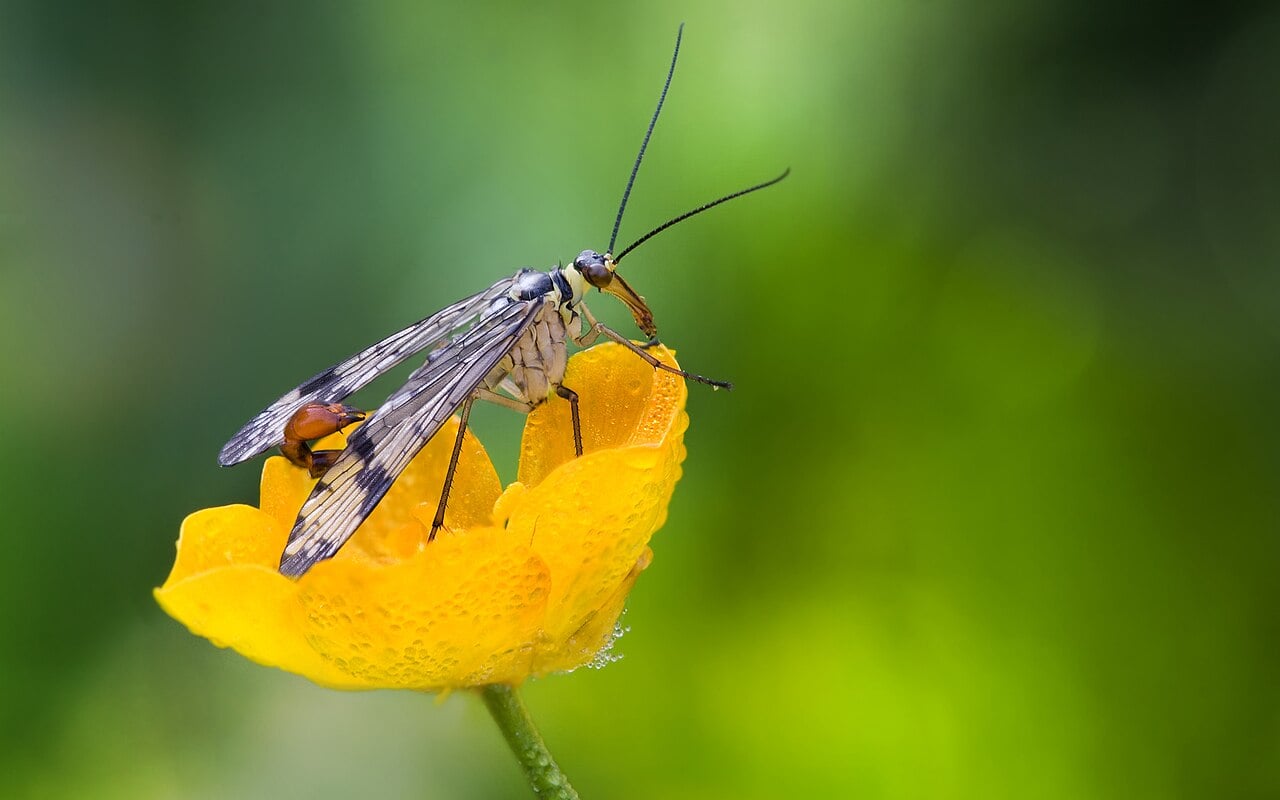
Scorpion Fly (Panorpa communis) Panorpa is a genus of scorpionflies that is widely dispersed in the Northern hemisphere. via Wikimedia Commons by Richard Bartz, Munich aka Makro Freak with usage type - Creative Commons LicenseFeatured Image Credit
Scorpion Fly (Panorpa communis) Panorpa is a genus of scorpionflies that is widely dispersed in the Northern hemisphere. via Wikimedia Commons by Richard Bartz, Munich aka Makro Freak with usage type - Creative Commons License


