
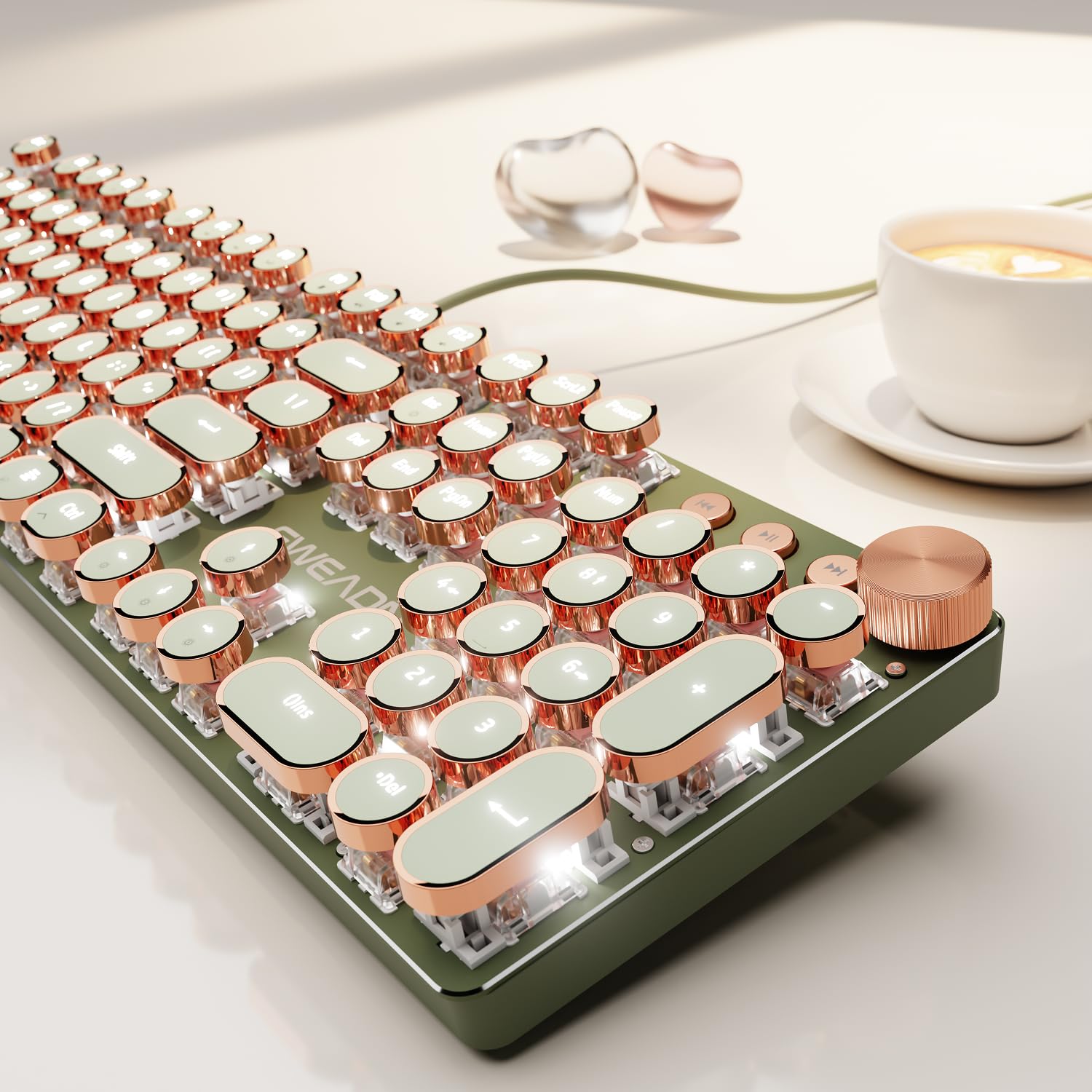
The classic clack of a mechanical keyboard now hides a lot more science under the keycaps, as Hall-effect, tunnel magnetoresistance (TMR), and optical switches push “contactless” designs into mainstream gaming boards. These newer switch types skip the traditional metal contacts in favor of magnets or light sensors, promising faster input, adjustable actuation points, and longer lifespans—often at a hefty premium over already pricey mechanical decks. For everyday typists, the difference can feel subtle, but for switch geeks and competitive players, these technologies quietly redefine what a “mechanical” keyboard even is.
To understand why contactless switches exist at all, it helps to look at how a conventional mechanical switch works: a stem and spring move two metal leaves together to complete a circuit when you press a key. As those contacts meet, they physically bounce and vibrate before settling, creating electrical noise that firmware has to filter out with a short debounce delay so a single press doesn’t register as multiple inputs. This design gives mechanical boards their familiar tactility and sound and can easily last tens of millions of presses, but the fixed actuation point and built-in debounce time are hard constraints baked into the hardware.
Hall-effect switches attack those constraints by turning each key into a tiny magnetic sensor setup: a small magnet sits in the switch stem, while a Hall-effect sensor on the PCB continuously measures the magnetic field as the key moves. Because the keyboard reads a position value along the entire travel path instead of waiting for two metal parts to make contact, there is effectively no contact bounce and therefore no forced debounce delay. That continuous readout lets firmware define actuation anywhere along the key’s travel—often adjustable in fine increments, with some enthusiast boards tuning from roughly 0.1 mm near the top all the way down toward bottom-out. It also enables “rapid trigger” behavior, where a key can re-register as released or pressed the moment it moves past a programmable threshold, instead of waiting to cross a fixed reset point like a traditional mechanical switch. The lack of physical contacts means wear is reduced, so manufacturers commonly tout lifespans in the 100-million-press range and market these boards as ideal for fast-twitch competitive play.
TMR keyboards take the magnetic idea further by replacing the Hall sensor with a tunnel magnetoresistance element, a structure made of ultra-thin ferromagnetic layers separated by an insulating barrier whose electrical resistance shifts with changes in magnetic field. In practice, a TMR switch still uses a magnet in or near the stem, but the sensor’s sensitivity is much higher, letting the keyboard track key position with precision down to hundredths of a millimeter in some implementations. Cherry’s documentation on its TMR-based magnetic boards highlights extremely stable signals, very low energy consumption, and fine-grained per-key tuning that can exceed Hall-effect precision. Comparative breakdowns show both Hall and TMR designs are contactless and long-lived, but TMR typically wins on signal quality and resolution, at the cost of more complex sensor hardware. The typing feel, however, still comes from the mechanical housing and spring weight, so the user experience can be tuned to resemble classic linear or tactile switches even while the underlying sensing method is radically different.
Optical switches, which have been around longer in gaming keyboards, swap magnets for light, using an infrared beam and sensor to detect when the stem blocks or reflects the signal instead of closing a metal contact. As with magnetic designs, this contactless sensing eliminates electrical bounce and reduces or removes the need for debounce, allowing faster response and more consistent actuation. Optical boards can also offer adjustable actuation points, though implementation details vary by brand and many mainstream models still lock in a fixed trigger position while advertising “faster” inputs as their main selling point. Typing feel again depends on the mechanical construction—stem, spring, housing—so an optical linear switch can feel very similar to a traditional linear mechanical switch even if the underlying electronics are completely different.
All of this raises the obvious question: if the science is so cool, why do many enthusiasts still swear by conventional mechanical boards? Independent testing and commentary often find the raw speed advantage of Hall-effect and similar switches matters most at the upper tiers of competitive play, where shaving milliseconds off input and tweaking actuation per key can meaningfully affect performance. At more typical skill levels, reviewers note that marketing hype over “instant” actuation can overshadow factors like key feel, build quality, and layout, which still drive most people’s satisfaction with a keyboard. Some writers are openly skeptical of the idea that Hall-effect boards are an automatic upgrade, pointing out that frictionless, muted magnetic switches can feel less satisfying than a good mechanical deck, and that most gamers won’t notice the difference outside of niche scenarios. On the other side, proponents argue that features like per-game actuation profiles, rapid trigger for repeated strafing, and extended durability make these boards compelling for players who like to fine-tune gear as much as their graphics settings.
For buyers staring down spec sheets full of buzzwords—Hall, TMR, optical, magnetic—the practical takeaway is simple: the sensing tech mostly changes how the keyboard reads your key position, not whether it can feel like a favorite linear, tactile, or clicky switch. Contactless designs bring real benefits in precision, adjustability, and long-term reliability, but those gains are incremental rather than magical for anyone who isn’t chasing high-end competitive performance. The safest path is to treat Hall-effect and TMR boards as another flavor of enthusiast gear: worth exploring if you love tuning actuation points and experimenting with rapid-trigger behavior, but not a mandatory upgrade if a well-built mechanical keyboard already hits your sweet spot. In other words, pick your deck by feel and ergonomics first—and if the magnets and sensors come along for the ride, consider them a bonus rather than the whole story.


