
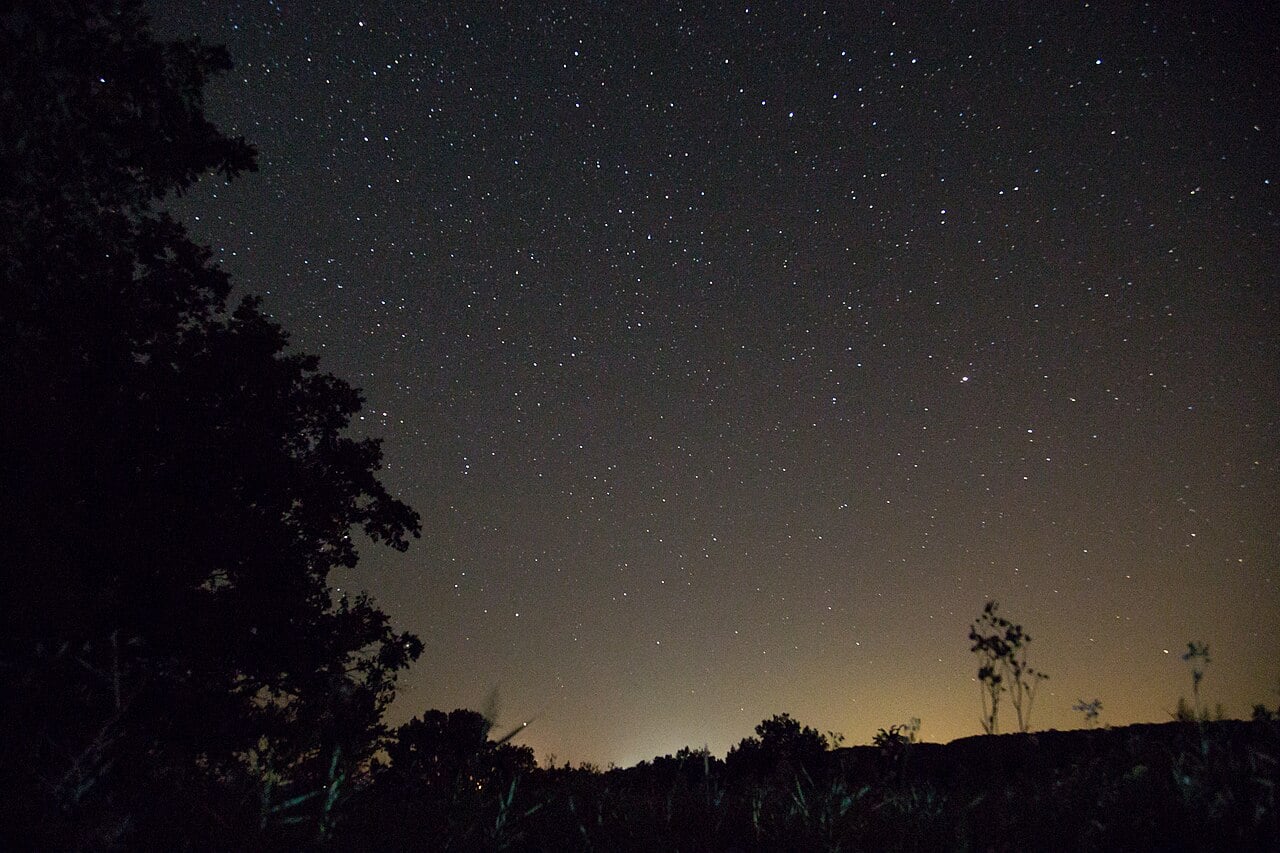
October 2026 is basically a month-long cosmic Halloween event, with NASA flagging a quartet of skywatching “tricks and treats” that read like a campaign log for a space-themed RPG: a disappearing Jupiter, dragon-branded meteors, a shower born from Halley’s Comet, and a blazing Hunter’s Moon just days before spooky season peaks. As first reported by ScienceDaily, the agency’s latest “What’s Up” guidance turns October into prime viewing time for anyone who likes their astronomy with a side of cosmic drama.
The headliner for telescope geeks landed early in the month, when a waning crescent Moon briefly swallowed Jupiter from view in a rare lunar occultation visible across much of the eastern United States. According to NASA’s blog post “Disappearing Planets, Dragon Fireballs, Hunter’s Moon Fill October’s Spooky Skies,” the event unfolded in the pre-dawn hours of October 6, as the Moon slid in front of Jupiter and its four major Galilean moons, turning the gas giant into a jump-cut vanish for anyone with clear skies. Outlets like Forbes and the Voyageurs National Park night-sky calendar framed it as a can’t-miss show for astrophotographers, with the occultation happening low in the eastern sky and rewarding those willing to set alarms for the small hours.
On the meteor front, October plays host to not one but two headline showers, starting with the Draconids—arguably the most on-brand event for fantasy fans looking for dragons in the sky. NASA notes that the Draconids peak on the evening of Thursday, October 8 into the early hours of Friday, October 9, with favorable viewing beginning around 9 p.m. EDT and continuing past midnight as the radiant in the constellation Draco climbs higher. The Draconids are usually a modest show, but as the Weather Network points out, this stream has a history of surprise outbursts, which keeps hardcore meteor hunters watching just in case the dragon decides to breathe real fire again. For casual stargazers, the big win is that the Draconids are best seen in the evening rather than the usual pre-dawn window, making them easier to catch between gaming sessions or horror marathons.
The real lore-heavy prize arrives later in the month when the Orionid meteor shower, made from debris shed by Halley’s Comet, reaches its annual peak around the night of October 21 into the early morning of October 22. NASA’s October skywatching guide pegs the Orionids as a medium-strength shower, typically offering up to around 20 meteors per hour under dark conditions, though suburban observers may see closer to a handful every hour thanks to light pollution. The Planetary Society and the Weather Network both emphasize that every Orionid streak is essentially a tiny fragment of Halley’s Comet burning up in Earth’s atmosphere, which makes this shower feel like a recurring crossover event with one of astronomy’s most iconic names. With the Moon setting before dawn on the 22nd in many locations, the predawn window that night is the premium slot for anyone hoping to catch cinematic fireballs arcing out of the constellation Orion.
Capping the month’s spooky aesthetic is October’s full Hunter’s Moon, which reaches peak illumination just after midnight Eastern time on October 26, making the evening of October 25 the prime time to watch it heave itself over the eastern horizon. Timeanddate.com and Space.com both detail how the Hunter’s Moon earns its name as the first full Moon after the Harvest Moon, traditionally tied to late-season hunting and gathering in the Northern Hemisphere. As it rises near sunset, the Moon often takes on a yellow-orange hue thanks to Earth’s atmosphere scattering blue light, an effect that Space.com describes as giving the disk a subtly stalkerish glow—right on theme for Halloween week. The Old Farmer’s Almanac and other folklore-heavy sources underline that no telescope is needed here; finding an unobstructed eastern view and simply watching the Moon climb is sufficient for a full-on cosmic mood board.
October’s calendar doesn’t stop there, either—think of the NASA-highlighted “tricks and treats” as the main quest, with a bunch of side missions sprinkled throughout the month. Saturn hits opposition on October 4, putting the ringed giant closest to Earth and visible all night, a perfect excuse to dust off that entry-level telescope and finally see the rings as something more than a smudge. Sky guides from National Geographic and Travel + Leisure also call out Mars wandering through the Beehive Cluster around October 11–12, the Andromeda Galaxy standing out on a moonless mid-month evening, and a late-October encounter between the nearly full Moon and the Pleiades that temporarily hides some of the cluster’s brightest stars. For geek-culture fans who already live in worlds full of space dragons, ancient comets, and mythic hunters, October 2026’s night sky is basically live DLC—step outside, look up, and you’re in the middle of the story.
Image Credits
In-Article Image Credits
Night sky filled with stars via Wikimedia Commons by Alexey Elfimov with usage type - Creative Commons LicenseFeatured Image Credit
Night sky filled with stars via Wikimedia Commons by Alexey Elfimov with usage type - Creative Commons License


