
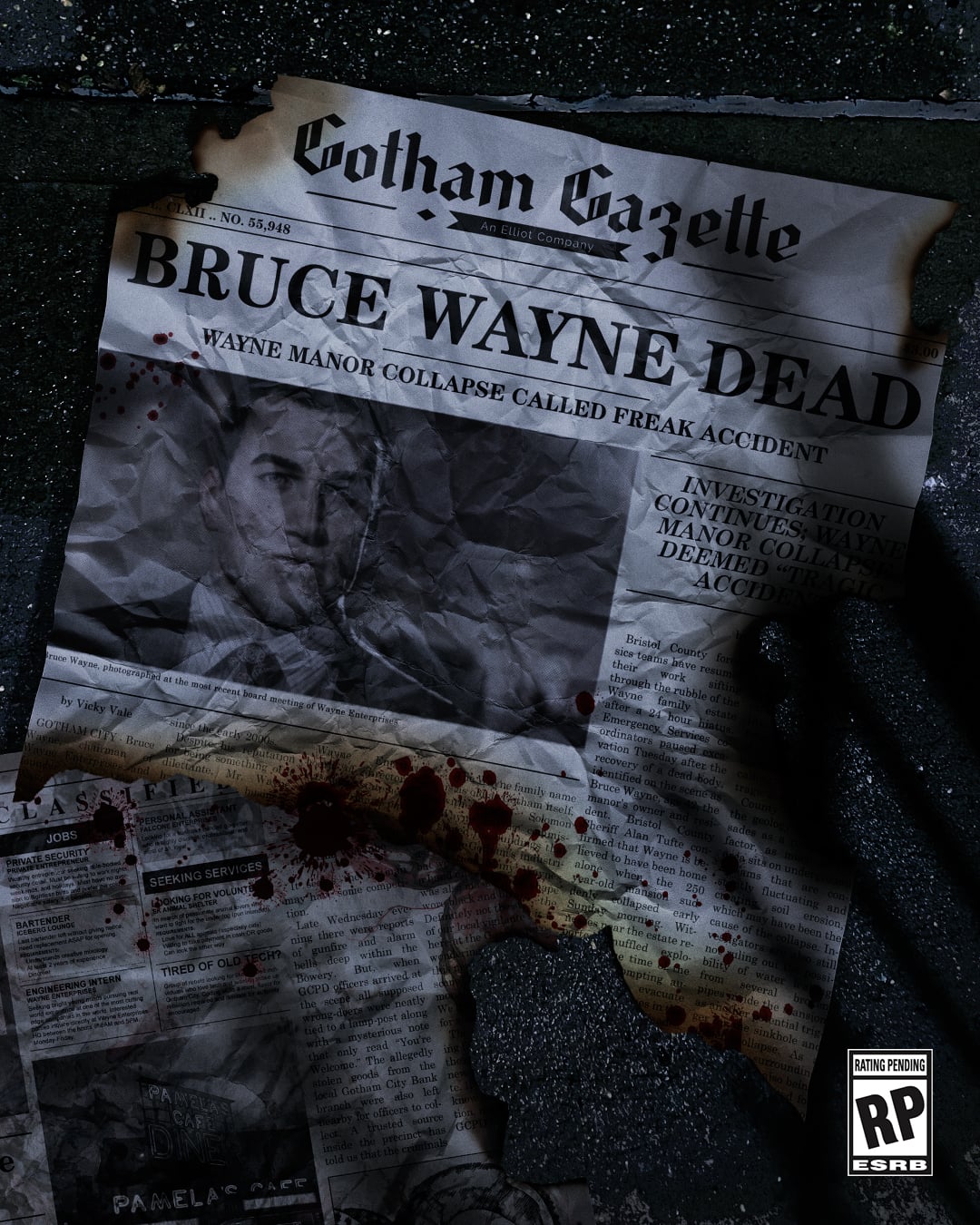
DC’s November 2026 solicitations are quietly setting up one of the most explosive Batman/Superman cliffhangers in years: Bruce Wayne apparently dies in public while Clark Kent is jailed for murder. The pairing of Batman #15 and Detective Comics #1115 has already sparked a “joined‑up” theory from Bleeding Cool that the two events are secretly the same crime seen from opposite angles.
According to the Batman #15 solicitation, six assassins converge on Gotham in the aftermath of the recent “Bad Seeds” storyline, with billionaire playboy Bruce Wayne as their singular target. The hit is planned for the opulent El Granda Gala Enmascarado, and the copy bluntly states that by the end of the night, Bruce Wayne will die before the eyes of the world. Writer Matt Fraction teams with artists Brian Ching and Jesse Lonergan to confront the criminal conspiracy that has been simmering since Batman #1, building on earlier arcs in which a masked mastermind known as the Minotaur stepped out of the shadows to test both Batman and Bruce in a sprawling labyrinthine plot. Far from a simple character death, the solicitation frames Bruce’s demise as the moment Batman finally “gets to work,” implying the public murder is a trigger for a deeper investigation rather than the end of the story.
On the Superman side, Detective Comics #1115—written by Tom Taylor with art by Mikel Janín—drops the bombshell that mild‑mannered reporter Clark Kent has been accused of murder and is being held in custody awaiting trial. The preview text emphasizes that Batman is the one person who can clear Clark’s name, yet as Bruce digs through the case he finds more evidence that condemns his friend than exonerates him. Coverage of the issue notes that DC is deliberately keeping the victim’s identity and the precise nature of the incriminating evidence secret ahead of the book’s November 18, 2026 release, inviting speculation over how such a cautious hero could be implicated at all.
Bleeding Cool’s “joined‑up” theory stitches these two mysteries together, arguing that the only way Clark Kent could plausibly be charged with murder at the exact moment Bruce Wayne is targeted is if Clark is the person who “kills” Bruce—deliberately, and under controlled circumstances—to save him from the assassins. In this reading, Clark stages Bruce’s death at the gala as a kind of reverse “death of Superman” moment, allowing Bruce to vanish into the shadows while the world, and the assassins’ employers, believe their mission was a success. Batman would then investigate Clark’s case from both sides of the mask, publicly as the supposed victim Bruce Wayne and privately as the Dark Knight, using the murder inquiry to unravel the larger criminal algorithm Fraction’s run has been teasing since Batman #1. The solicit language for both issues leans hard into this ambiguity—Batman is explicitly said not to have been killed even as Bruce Wayne dies, and Clark’s investigation keeps turning up damning evidence—creating a perfect canvas for a bait‑and‑switch twist built on identity and perception.
Fans are understandably skeptical that DC is about to permanently bury Bruce Wayne, given the publisher’s long history of killing and resurrecting the character in increasingly baroque ways. Recent stories like Batman #149 played with the idea of Bruce’s “official” death by revealing that the version who dies peacefully in the gardens of Wayne Manor is a clone, allowing DC to claim the mantle has fallen while quietly preserving the core Batman for future tales. Earlier events such as Grant Morrison’s Return of Bruce Wayne, in which the hero was lost in time after Final Crisis, and the Court of Owls saga, which literally scrawled “Bruce Wayne will die tomorrow” into Gotham’s walls, show how the company uses the threat of Bruce’s demise as a narrative engine rather than a final endpoint. Against that backdrop, a public assassination that somehow leaves Batman untouched reads less like a farewell and more like another elaborate identity shuffle.
Putting Clark Kent on the hook for murder is equally loaded, tapping into decades of “World’s Finest” stories about trust, secret identities, and the strain ordinary legal systems feel when confronted with godlike heroes. DC has explored similar territory before, from modern retellings of Bruce and Clark’s first meeting built around unusual criminal cases to twists where supporting characters like Jimmy Olsen inadvertently send Bruce Wayne to prison after following a lead in Batman/Superman: World’s Finest #13. Detective Comics #1115 raises those stakes by making Clark himself the accused and forcing Batman to weigh his forensic instincts against his friendship, a classic setup for a story that could reshape how the DC Universe views both heroes.
All of this is unfolding as DC pushes big, universe‑scale initiatives like the DC All In line and the crossover DC K.O., which already toyed with killing and restoring Superman amid multiversal tournaments and cosmic rewrites. In that climate, a seemingly grounded murder case and a gala assassination could easily be the street‑level front to a much larger plot, whether it ultimately ties into those events or simply echoes their themes of sacrifice and reset. Whatever the final twist, November’s Batman #15 and Detective Comics #1115 look poised to deliver a tightly woven Batman/Superman mystery—and fans will be watching closely to see whether Bruce’s “death” and Clark’s alleged crime turn out to be two halves of the same impossible choice.


