
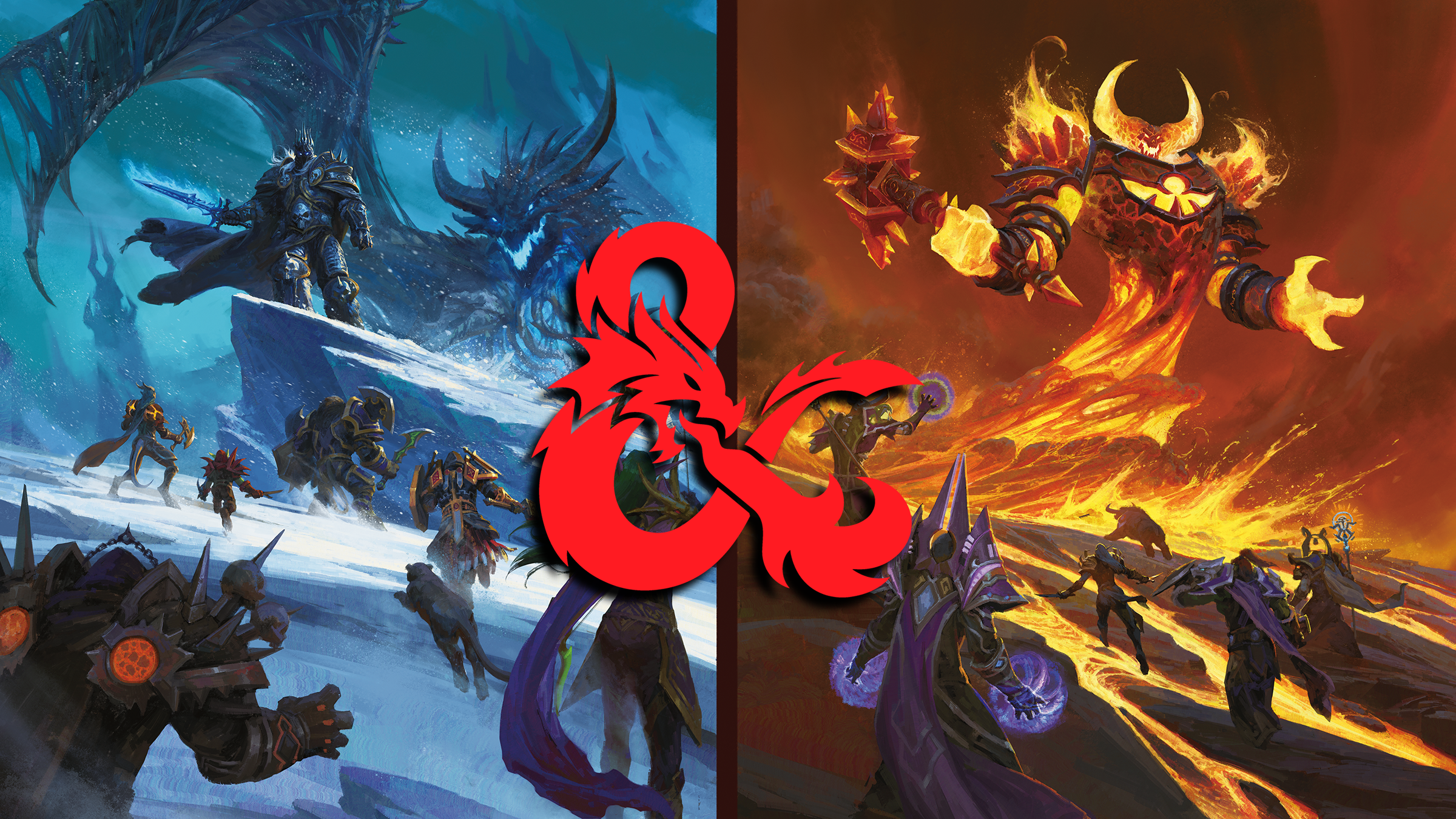
Dungeons & Dragons is using World of Warcraft to make its biggest rules experiment yet. The first release in Wizards of the Coast’s new Universes Beyond initiative arrives November 17, 2026, bringing Azeroth to the tabletop in a gameplay expansion developed with Blizzard Entertainment. Rather than treating WoW as a thin layer of familiar names and monsters, the book uses the MMO’s faction structure, professions, dungeons, and class identities to push several underdeveloped parts of modern D&D forward. The crossover’s broader mechanical ambitions could matter well beyond this one licensed setting.
The most obvious hook is character creation. Players can build a new hero from Azeroth or adapt the identity of an existing World of Warcraft character, with new species, subclasses, monsters, spells, and dungeon material designed for the current D&D rules. Wizards has also confirmed nine new subclasses, giving the book a larger gameplay footprint than a typical setting guide. The project is intended to let groups revisit recognizable locations and enemies while still functioning as a complete tabletop adventure toolkit. D&D Beyond’s official recap describes the book as part of November’s Season of Champions and confirms Master Tier early access beginning November 3.
Renown is where the crossover may have its most useful long-term impact. The 2024 Dungeon Master’s Guide provides the basic idea—tracking a party’s standing with organizations or communities—but leaves much of the reward structure to individual Dungeon Masters. The WoW book turns that loose framework into a more visible progression system, with more than 20 Azeroth factions offering rewards as characters build relationships with them. That gives reputation a concrete purpose instead of making it merely a number attached to the campaign’s lore.
Crafting receives a similar expansion. The book adds blueprints, ingredients, and profession-style recipes, while broadening the role of tool proficiencies beyond their usual class associations. Gathering activities, including the expanded Forage action, become meaningful parts of exploration, and non-spellcasters gain more ways to create useful or magical equipment. The profession list reportedly draws heavily from WoW, covering activities such as mining, herbalism, fishing, archaeology, alchemy, blacksmithing, cooking, engineering, and enchanting. Wargamer’s preview notes that the goal is to translate WoW’s systems without making the tabletop game feel like a computer interface.
That balance will be important. D&D can borrow the MMO’s faction reputation and production loops, but a tabletop campaign still needs room for improvisation, player choice, and a Dungeon Master’s interpretation. The strongest parts of the expansion may therefore be the systems that provide structure without dictating exactly how a group must play. Renown can organize an entire campaign’s political relationships, while crafting and foraging can give exploration a stronger material payoff.
The experiment also establishes a clear direction for what comes next. Wizards has announced a Star Wars collaboration for the Universes Beyond line, with the Season of Rebellion planned for 2027 and a late-2027 window tied to the original film’s 50th anniversary. That project will test whether the WoW book’s approach can transfer to a franchise built around space opera rather than fantasy adventure. The Star Wars announcement confirms that the crossover will follow World of Warcraft as one of D&D’s first major licensed settings.


