
Japan’s famously noisy arcades have hit an unusually quiet stretch after Sega Fave took its ALL.Net and Aime services offline following unauthorized access to company servers. The shutdown has disabled online play, card-based features, and other connected functions across a large number of Sega and Bandai Namco cabinets, creating a week-long disruption for Japanese arcade operators.
Sega Fave says it detected the intrusion on servers associated with ALL.Net, its arcade network, and Aime, the player-card platform tied to many of its machines. The company suspended related services at 3 p.m. Japan time on November 1 while it investigates the scope of the incident and checks whether the systems can safely return. Its initial investigation found no evidence that customer or business-partner information had been leaked, while payment data—including credit-card information—is stored separately from the affected servers.
The consequences reach beyond Sega’s own hardware. ALL.Net-connected games from Sega include popular rhythm and racing attractions such as maimai, CHUNITHM, and Initial D The Arcade. Bandai Namco titles that depend on the same infrastructure include Taiko no Tatsujin, Mario Kart Arcade GP DX, and Gundam Extreme Vs. The outage has affected online matches, player-card functionality, location finders, game-specific web services, and other network-dependent features. Independent coverage also reports that some Bandai Namco cabinets cannot remain fully operational indefinitely without renewed authentication.
There is a small sign of movement for players. Bandai Namco’s ALL.Net-supported games have begun a gradual trial restart, with online play and card use enabled in the first phase. Sega’s own titles remain under maintenance, however, and the company has not supplied a restoration estimate. Offline arcade machines that do not depend on ALL.Net continue to operate, while Taito and Konami cabinets use separate network and authentication systems and are not part of this particular shutdown.
ALL.Net is more than a matchmaking layer: Sega launched it to handle automatic game updates, usage data, online play, and nationwide rankings. That centralization helps operators manage connected cabinets at scale, but it also means a security incident can silence multiple publishers’ games at once. For now, players are being asked to wait for Sega Fave’s security checks and further notices; the company has said another bulletin is expected on November 10.
Image Credits
In-Article Image Credits
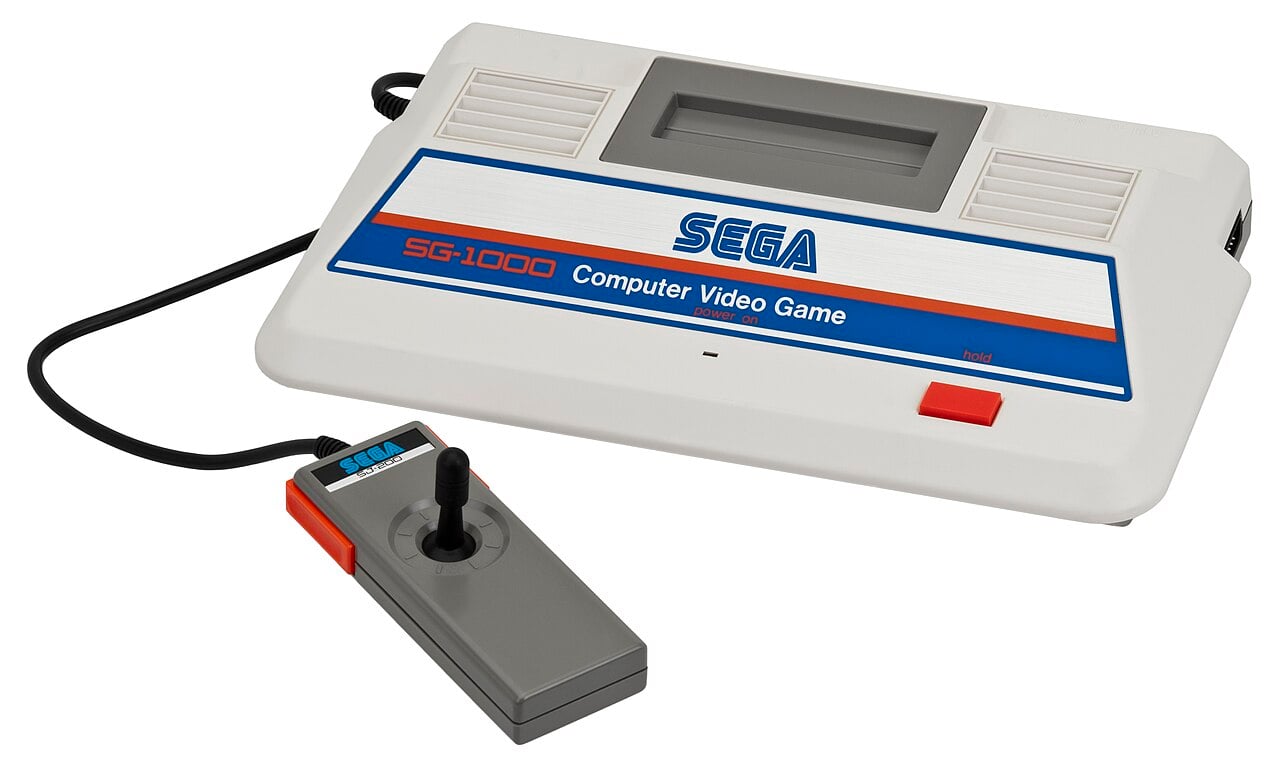
The Sega SG-1000, a video game console released in Japan in 1983 via Wikimedia Commons by Evan-Amos with usage type - Public Domain. By Evan-Amos - Own work, Public Domain, https://commons.wikimedia.org/w/index.php?curid=18273359Featured Image Credit
The Sega SG-1000, a video game console released in Japan in 1983 via Wikimedia Commons by Evan-Amos with usage type - Public Domain. By Evan-Amos - Own work, Public Domain, https://commons.wikimedia.org/w/index.php?curid=18273359


