
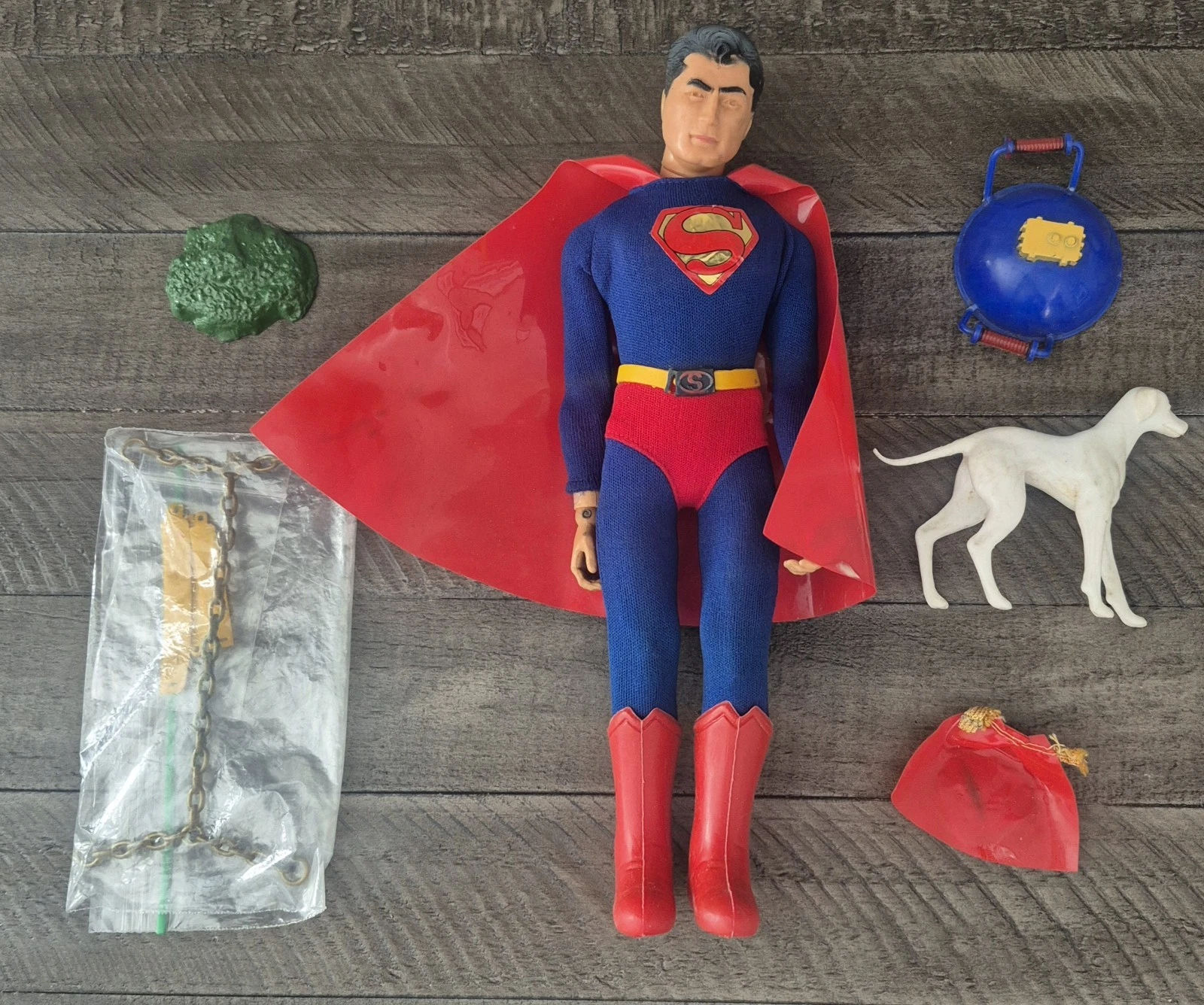
Superman’s first bona fide action figure is about to hit the auction block, and the weirdest part is that the Man of Steel isn’t actually the guy under the cape. Heritage is set to sell one of only three graded Superman Captain Action sets known to exist, with bidding already climbing past $2,000 days before the hammer falls, underscoring how a quirky 1960s toy gimmick has turned into a modern collector grail.
By the mid‑1960s, Superman’s likeness had already appeared on everything from wooden dolls and wind‑up toys to lunchboxes and shampoo bottles, but none of those truly fit the emerging “action figure” category that G.I. Joe had just defined. Hasbro’s 12‑inch G.I. Joe, created by toy designer Stan Weston, introduced the idea of a fully articulated, poseable figure in realistic fabric clothing, setting off a rush among rival companies to find the next big character‑driven toy line. Ideal Toy Company saw an opening in superheroes, which were surging back into popularity thanks to loosened Comics Code restrictions and the boom in colorful Marvel and DC titles, and decided Superman would finally get an action figure—even if he had to borrow someone else’s body to do it.
After co‑creating G.I. Joe, Weston left Hasbro and founded the licensing firm Leisure Concepts, where he assembled a powerful roster of clients including DC Comics, Marvel, and King Features properties like Flash Gordon and The Phantom. Armed with that portfolio, he pitched Ideal on a superhero‑themed counterpart to G.I. Joe under the working name “Captain Magic,” a single figure who could adopt the identities of any licensed hero via costume changes. Ideal loved the concept but pushed for a punchier name: the character was rechristened Captain Action and launched to considerable fanfare in 1966 as a 12‑inch figure in a blue‑and‑black uniform, complete with ray gun and lightning sword.
The hook was as clever as it was strange: kids bought Captain Action as the only actual figure in the line, then purchased separate costume sets to transform him into Superman, Batman, Aquaman, Captain America, The Phantom, The Lone Ranger, Flash Gordon, Steve Canyon, or Sgt. Fury. Each set came with a cloth outfit, character‑specific accessories, and a rubber face mask that slipped over Captain Action’s head like something out of Mission: Impossible, effectively turning one generic hero body into whichever icon the licensing gods allowed. On TV and in catalog ads, that shapeshifting was sold as a power fantasy, but in everyday play it meant that a kid who wanted Superman and Batman on the same battlefield needed to own multiple Captain Action bodies or constantly strip and re‑dress a single figure, a limitation collectors and historians alike now note as undermining the line’s play value.
The Superman set encapsulated the odd identity crisis at the heart of the toy: technically marketed as Superman’s first true action figure, it was in reality a costume pack engineered to overwrite Captain Action’s default persona. The outfit delivered a classic blue suit, red cape, and chest emblem, plus character props like a Kryptonite rock and other accessories designed to evoke stories from the comics, but under the rubber mask there was still the same black‑haired Captain staring back. Over time those fragile elements—cloth, paint, tiny accessories, and soft masks prone to tearing—became a nightmare for completists, which is why intact Superman costume sets, especially ones professionally graded and still matched to an original figure, are staggeringly rare today.
Ideal doubled down on the concept in 1967 with additional outfits and two new figures: Action Boy, a youthful sidekick who could don Robin and other junior hero costumes, and later Dr. Evil, a bald, blue‑skinned villain who finally gave Captain Action someone unique to fight. The brand even spun out into a short‑lived DC Comics series that Mark Waid has chronicled as one of the company’s earliest experiments in building narrative around a toy line, further cementing Captain Action’s cult status among comics historians. Despite those expansions, the figure family was discontinued by 1969 as tastes shifted and more straightforward character‑specific toys began to crowd shelves, leaving Captain Action’s everything‑and‑nothing identity as an odd footnote in superhero merchandising history.
In the decades since, Captain Action has been revived intermittently through new toys, collectibles, and reprints, while vintage sets like the Superman costume have climbed steadily in value as collectors hunt for pieces that survived childhood without being lost or destroyed. The Heritage auction of a high‑grade Superman Captain Action set doesn’t just spotlight a rare artifact; it highlights the moment when superheroes, licensing, and toy design collided to create the modern idea of a superhero action figure—even if the first one had to wear a mask to pretend he was really Superman.


