
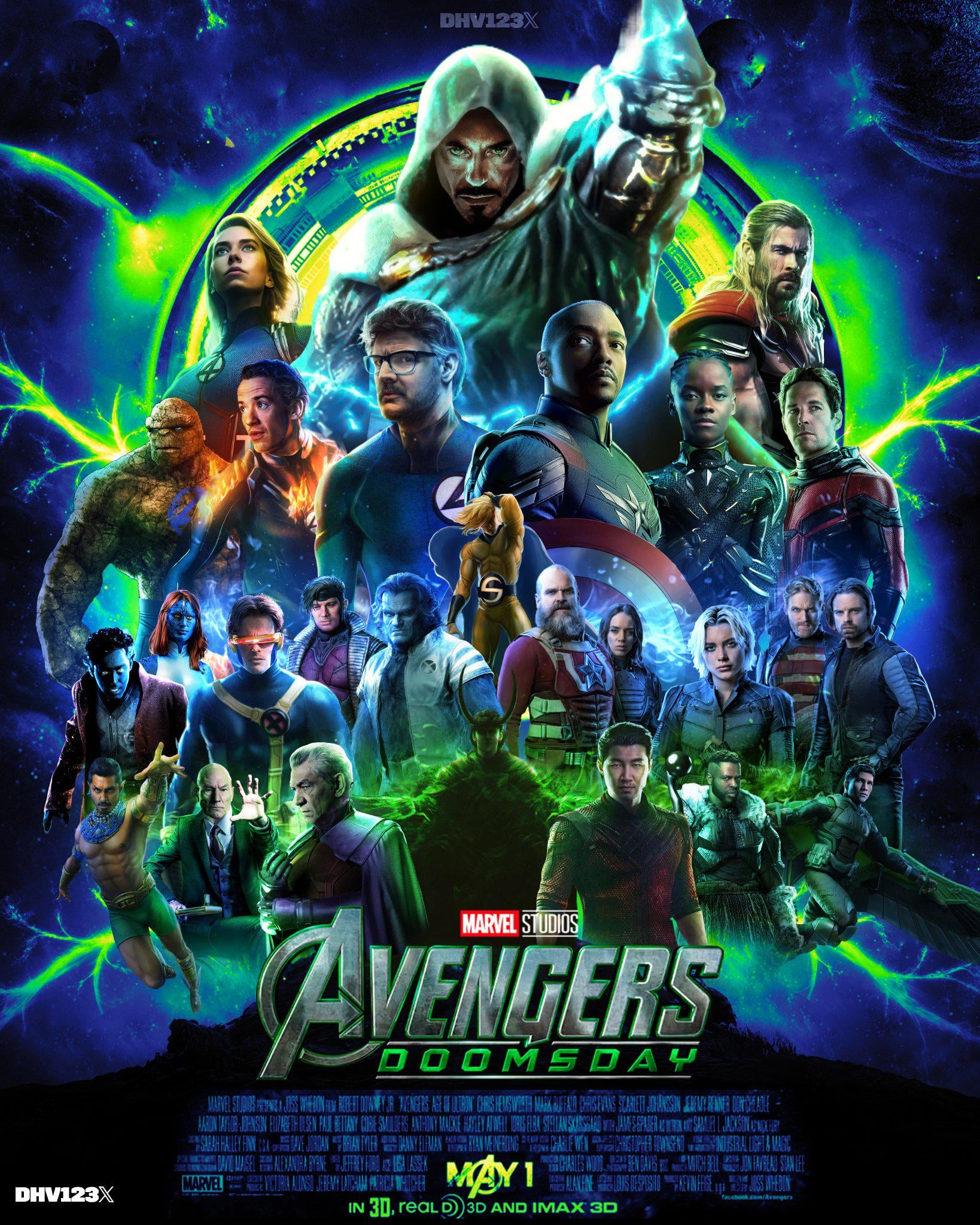
Marvel is treating Avengers: Doomsday like more than just the next big crossover – it’s the film that has to prove the Marvel Cinematic Universe still deserves its crown, and that its sprawling multiverse experiment can actually pay off.
Marvel Studios officially lists Avengers: Doomsday as a Phase Six tentpole, currently scheduled to hit theaters on December 18, 2026, with Anthony and Joe Russo back in the director’s chairs for their first MCU feature since Avengers: Endgame. The film is produced by Marvel Studios alongside the Russo brothers’ AGBO banner and positioned as the direct follow-up to Endgame, making it the 39th entry in the MCU’s main film line and the first of a two-part climax that will culminate in Avengers: Secret Wars. Disney’s own movie site reinforces that December 18 date and lists the movie as a major holiday release, underscoring how central it is to the studio’s late-2026 theatrical slate.
Story-wise, Avengers: Doomsday looks like the most aggressive crossover Marvel has ever attempted. According to early plot breakdowns, the movie brings together three major groups of heroes: the established Avengers and New Avengers from Earth-616, the newly introduced Fantastic Four from an alternate reality, and the “original” X-Men from yet another universe, all forced to confront an existential threat engineered by Doctor Doom. In a twist that has already set fandom on fire, Robert Downey Jr. returns to the MCU not as Tony Stark but as Doom himself, leading an ensemble that spans returning Avengers stalwarts like Chris Hemsworth and Anthony Mackie, newcomers from Thunderbolts and The Fantastic Four: First Steps, and legacy X-Men actors such as Patrick Stewart and Ian McKellen. The first trailer, released in the wake of San Diego Comic-Con 2026, leans into that “everyone versus Doom” hook, showcasing rapid-fire glimpses of Avengers, Wakandans, Thunderbolts, mutants, and more converging on a single catastrophic event.
That scale is part of why outlets like Polygon are framing Doomsday as a make-or-break moment for the MCU. In Polygon’s Patch Notes newsletter, the film is described as a pressure test for a franchise that has spent years layering multiverse rules, legacy characters, and corporate crossovers without a clear emotional endpoint, arguing that Doomsday must both pay off those threads and convince audiences that “big crossover event” still means something coming from Marvel[Polygon]. After a post-Endgame period defined by uneven reception and talk of superhero fatigue, this movie has to deliver a clean narrative throughline – particularly around Doom as a central antagonist – or risk confirming that the MCU’s maximalist strategy has pushed casual fans away.
On the production side, Avengers: Doomsday also has to prove Marvel can still coordinate massive crossover logistics under new industrial pressures. Phase Six was designed as a multi-studio puzzle, with projects like Spider-Man: Brand New Day co-produced with Columbia/Sony, and both Doomsday and Secret Wars produced by Marvel and the Russo brothers as the connective tissue between those universes. That creates enormous stakes behind the scenes: Doomsday isn’t just about bringing Avengers, Fantastic Four, and X-Men together on screen, it’s about demonstrating that the complex web of rights, schedules, and creative voices behind the MCU’s multiverse can cohere into a single event film that doesn’t feel like homework.
Even the release date signals how much is riding on the movie. Disney previously shifted Avengers: Doomsday out of an earlier spring 2026 slot as part of a broader reshuffle of its theatrical calendar, eventually landing on December 18, 2026, where it now faces direct competition from Dune: Part 3 and has reportedly ceded some IMAX territory in the process. Multiple industry breakdowns have highlighted that move as a bet that holiday audiences will still turn out for a mega-crossover superhero film – but also as a sign Marvel is willing to surrender premium format dominance if it means giving Doomsday more time to get its VFX-heavy multiverse spectacle right.
For fans, all of this turns Avengers: Doomsday into a litmus test. If the movie can balance its enormous cast, reintroduce Doom as a compelling long-term villain, and tie together Avengers, Fantastic Four, and X-Men in a story that feels like a true culmination rather than a spreadsheet exercise, it could reset the MCU’s trajectory and restore confidence in Phase Six’s endgame. If it stumbles, Polygon’s “make-or-break” label will look prescient – and Marvel may find itself rethinking what an Avengers movie even means in a post-Endgame, post-multiverse world.


