
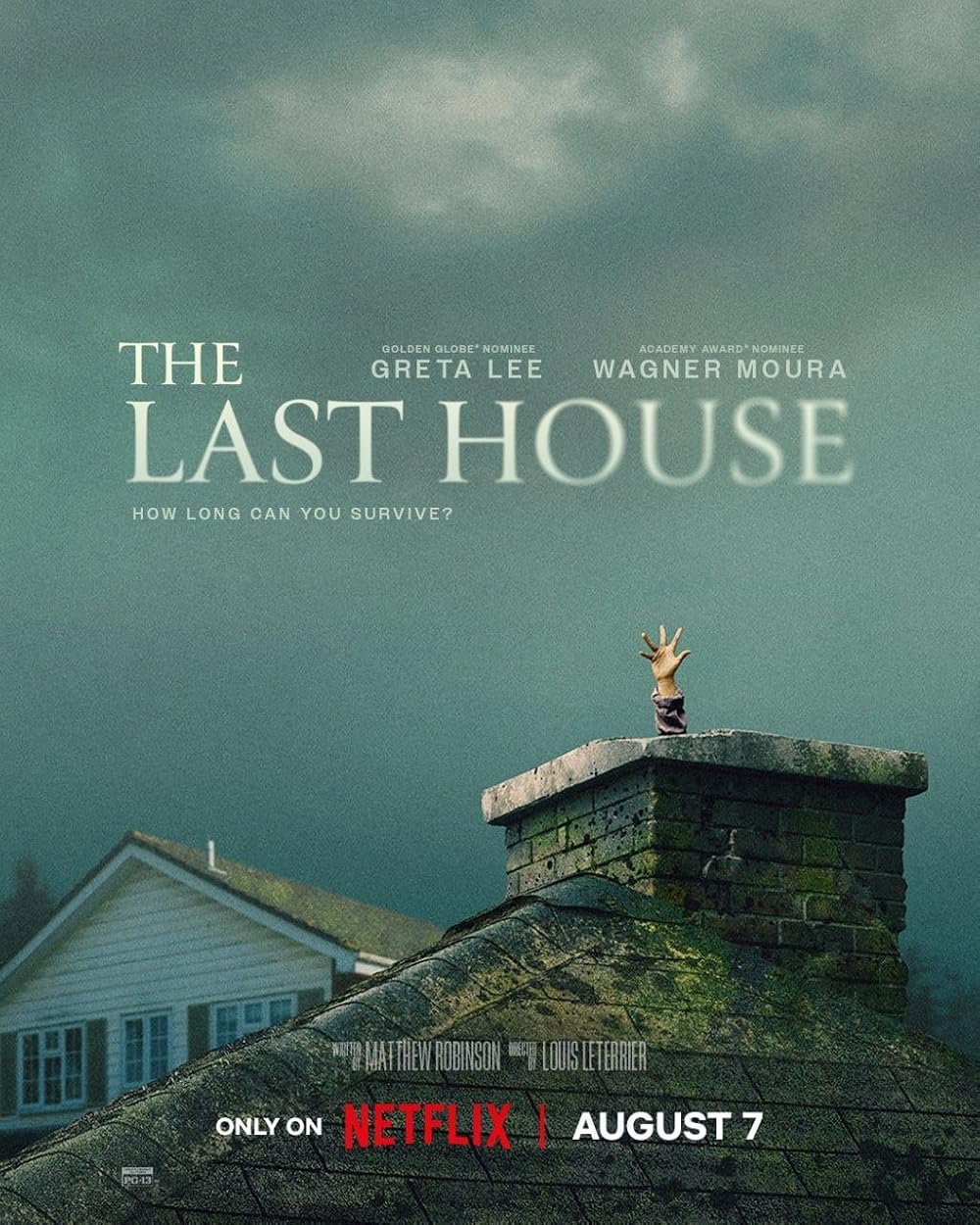
The Last House, Netflix’s latest sci-fi survival thriller, has blasted straight to the top of the streamer’s global charts with a staggering 27.5 million views in its first three days online. Released worldwide on August 7, the film quickly became Netflix’s most-watched title overall for the week of August 3–9, outpacing all other English-language movies and series on the platform. That early surge cements the movie as one of the year’s standout genre debuts for the service, and underscores how hungry audiences remain for high-concept, contained thrillers.
According to industry tallies reported by outlets like Variety and TheWrap, those 27.5 million views were logged between August 7 and Sunday, August 9, giving The Last House a decisive lead on Netflix’s weekly film rankings. TheWrap notes that the movie now ranks as the fifth-biggest Netflix film opening of 2026, sitting alongside fellow Chernin Entertainment production Apex, which bowed earlier in the year with 38.2 million views in its first three days. Separate chart data cited by Digital Spy shows the thriller rapidly climbing to the number-one position on Netflix’s global trending list and securing the top spot on the UK Top 10, signalling that its appeal is truly international rather than a US-only phenomenon.
So what is driving the buzz? The Last House follows a family of four who wake up to discover that every exit in their home—doors, windows, even vents—has been inexplicably sealed, trapping them inside with dwindling supplies and an unseen threat pressing in from the outside. Netflix categorises the film as a fusion of science fiction, horror, thriller, and survival drama, and listing sites peg its runtime at around one hour and 52 minutes, making it a tight, single-sitting watch rather than the start of an ongoing franchise. The movie is directed by Louis Leterrier, whose genre credentials include big-scale action and fantasy projects, and stars Greta Lee and Wagner Moura in the lead roles, supported by Gabriel Barbosa, Emma Ho, Noah Alexander Sosnowski, and Riley Chung. Before landing on Netflix, the project reportedly carried working titles like 11817 and Hideaway, hinting at its roots as a mystery-driven, high-concept experiment.
Critically, the movie is generating as much debate as it is traffic. On Rotten Tomatoes, The Last House currently holds a 28% approval rating from 47 critics, with an average score of 4.6 out of 10, suggesting a mixed to negative critical consensus despite its commercial momentum. The Guardian describes the film as a “post-Covid apocalyptic lockdown thriller,” framing its sealed-house premise as a deliberate reflection of recent global anxieties around confinement, contagion, and domestic tension. Horror-focused outlets such as Heaven of Horror emphasize the movie’s claustrophobic atmosphere and family dynamics, positioning it as a character-driven survival story rather than a creature feature or effects-heavy sci-fi spectacle. Meanwhile, genre coverage like Softonic has compared its tone to a Spielberg-style sci-fi thriller, highlighting its blend of grounded everyday life with escalating, inexplicable phenomena.
Behind the scenes, The Last House continues Netflix’s ongoing collaboration with production company Chernin Entertainment, which has become a reliable supplier of buzzy genre titles for the platform. Taken together with releases like Apex, the new thriller reinforces the streamer’s strategy of investing in mid-budget, high-concept films that can pull blockbuster-level attention without the overhead of theatrical distribution. For viewers, the movie’s success signals that there is still strong appetite for intimate sci-fi horror stories that play on familiar domestic spaces, especially ones that tap into a lingering cultural fascination with lockdown scenarios and unseen threats. As first highlighted by outlets such as ScreenRant, if The Last House can sustain this early momentum over the coming weeks, it may well shape the kind of genre experiments Netflix greenlights next—meaning more surreal, pressure-cooker stories for sci-fi and horror fans to binge in a single, nerve-fraying sitting.


