
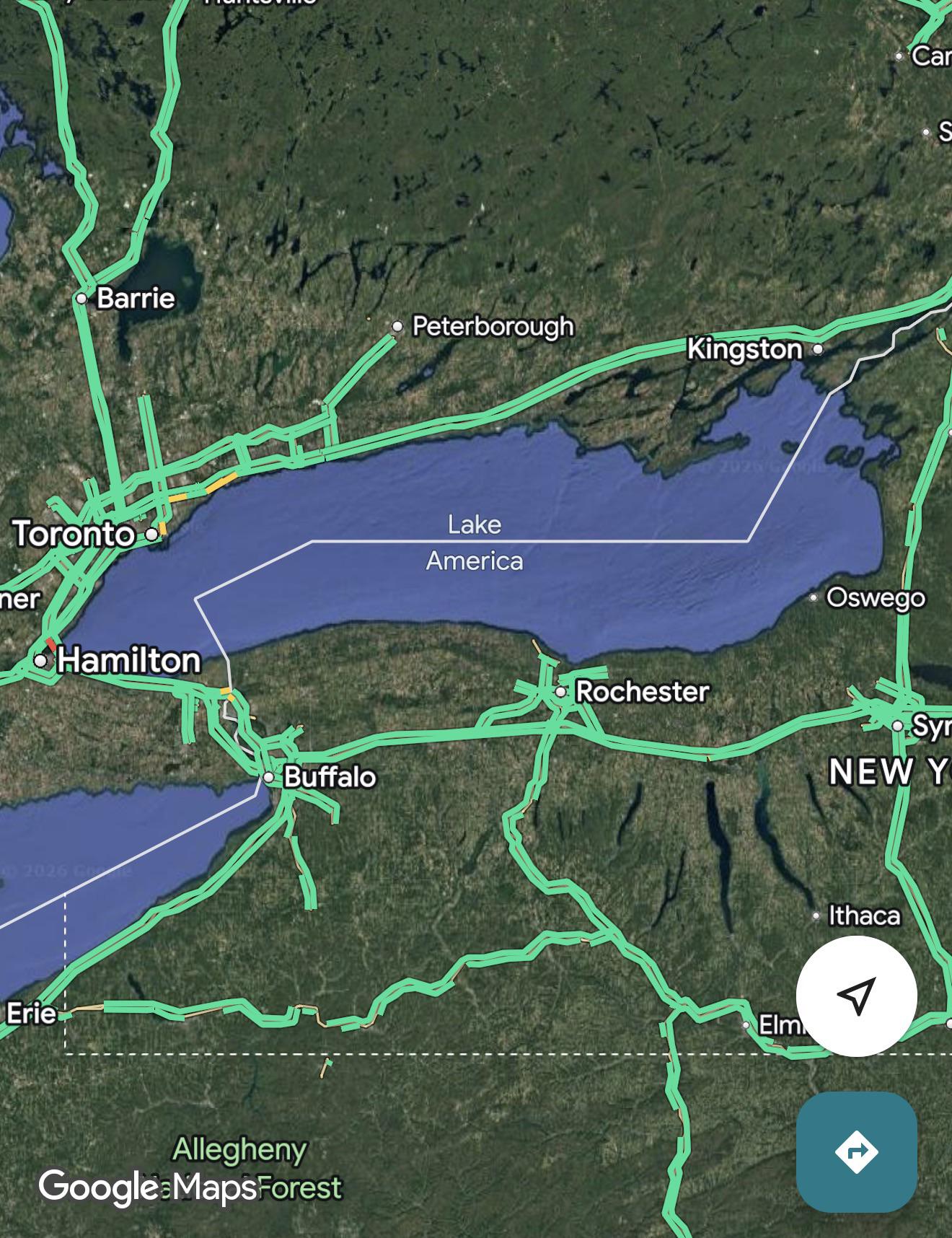
Lake Ontario just got a new name in one of the most widely used apps on the planet. For people using Google Maps inside the United States, the easternmost Great Lake is now labeled “Lake America,” while Canadian users still see the traditional “Lake Ontario” name on their screens.
The rebrand traces back to Washington, not Mountain View. On August 27, 2026, former President Donald Trump signed an executive order instructing federal agencies to rename Lake Ontario as “Lake America” in official records, directing the Interior Secretary and the U.S. Board on Geographic Names to update the Geographic Names Information System (GNIS) within 30 days. GNIS is the central database that standardizes place names across the federal government, and Google says it relies on that system for U.S. toponyms, much as it did when GNIS previously changed the “Gulf of Mexico” to “Gulf of America” in American records.
Once GNIS flipped the switch, Google moved quickly. In a post explaining the change, the company said that because GNIS had formally renamed Lake Ontario to Lake America for the United States, it updated Google Maps to match: users in the U.S. now see “Lake America,” users in Canada continue to see “Lake Ontario,” and viewers elsewhere in the world see both names side by side. Axios’ review of mobile and desktop confirmed that behavior on Sunday, noting that Apple Maps still shows the lake as Lake Ontario even for U.S. users.
Not every mapping service is following Washington’s lead. MapQuest, the self-described “OG of online mapping,” publicly refused to adopt the new federal name, sharing screenshots that still read “Lake Ontario” and joking about the order on social media. Reporting from Yahoo and Ground News indicates that MapQuest’s stance came even after the U.S. Geological Survey updated its electronic records and GNIS to reflect “Lake America,” underscoring a split between government databases and private platforms. Scientific and research groups are also pushing back: the International Association for Great Lakes Research has pledged to keep using “Lake Ontario,” citing the name’s more than 400-year history.
The renaming has ignited a broader debate about who gets to define digital geography. Coverage in The Conversation points out that modern map apps already localize names based on the viewer’s location, with examples like the U.S.-only “Gulf of America” label that diverges from what users in Mexico see. Critics argue that Google’s compliance with the Trump order in U.S. views, while Canada and many researchers stick with “Lake Ontario,” turns a shared body of water into a kind of cartographic split-screen—raising questions about whether borders, politics, or global consensus should drive what appears on everyday maps.
The backlash hasn’t been limited to policy wonks and geographers. Outlets like The Daily Beast describe Google Maps as “facing fury” for appearing to cave to Trump’s demands, framing the move as part of a broader pattern where tech platforms are pulled into culture wars over naming and representation. Canadian media, meanwhile, have highlighted the oddity of a single lake carrying different labels depending on which side of the border you’re standing on, emphasizing that Google and Apple have no obligation to adopt U.S. naming decisions for Canadian customers.
For everyday users—and for the map-obsessed geeks who live in these apps—the result is a quietly fractured reality. U.S. Google Maps users looking at the New York shoreline will now see “Lake America,” while friends across the water in Ontario still see “Lake Ontario,” and some rival services may never change at all. Whether other platforms follow Google’s lead or stand with MapQuest and the research community, the Lake Ontario/Lake America saga has turned a blue patch on the map into a live experiment in how much power governments and tech giants have to redraw the digital world we navigate every day.


