
Paranormal investigators have no shortage of gadgets, rituals, and theories promising contact with the unknown. Yet the more precise answer to whether any of those methods remain undebunked is also the least dramatic: none has won broad scientific acceptance, but a lack of proof is not automatically proof that every possibility has been definitively disproven.
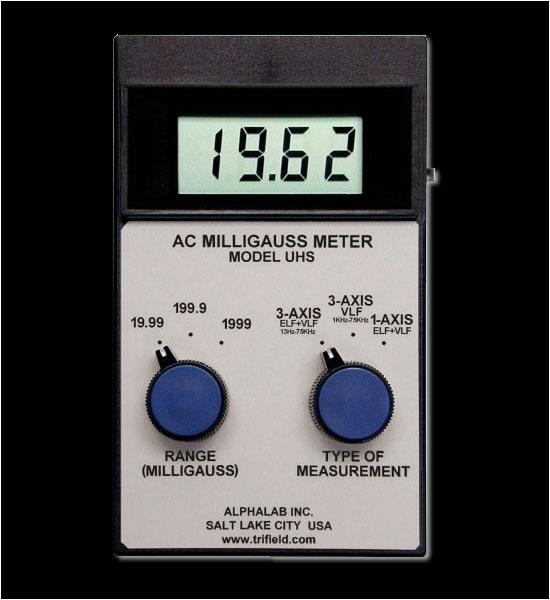
That distinction matters because most ghost-hunting equipment measures something real—just not necessarily anything supernatural. EMF meters register electromagnetic fields generated by wiring, appliances, phones, and other electronics. A reading can therefore be accurate while the conclusion drawn from it is mistaken. Investigators who use such devices responsibly should first map normal background levels and eliminate ordinary sources rather than treating a sudden spike as a ghost detector. Skeptical testing has found popular meters especially vulnerable to interference and easy manipulation, while there are no formal studies establishing that ghosts produce a measurable electromagnetic signature.
Digital recorders and spirit boxes create a different problem. Electronic voice phenomena may sound like words when a recording is replayed, but radio interference, compression artifacts, background noise, and auditory pareidolia—the tendency to perceive meaningful speech in randomness—offer mundane explanations. Spirit boxes intensify that ambiguity by rapidly scanning radio frequencies, mixing fragments of broadcasts with static. The resulting snippets can feel uncannily responsive, yet they are not isolated from the very signals that could be generating the apparent answers.
Several traditional techniques are less technological but no less vulnerable to hidden human influence. Dowsing rods, pendulums, Ouija planchettes, and table tipping can all be affected by the ideomotor effect: unconscious movements shaped by expectation, suggestion, or a participant’s own thoughts. That explanation does not mean people are deliberately faking an experience. It means a convincing sensation of external control can arise without an external agent moving the object.
The same evidentiary challenge applies to apparitions and the Stone Tape theory, which proposes that emotionally intense events can somehow be recorded in physical materials and replayed later. Apparition reports are often powerful personal experiences, but they are difficult to document under controlled conditions. The Stone Tape idea likewise lacks a demonstrated physical mechanism or repeatable laboratory evidence. Personal testimony can explain why a story matters without establishing what caused it.
What would move paranormal investigation beyond the current stalemate is not a more elaborate prop, but better methodology: calibrated equipment, environmental baselines, time-stamped recordings, control sessions, independent reviewers, and results that can be reproduced by other teams. Even then, a strange reading would initially be an anomaly—not a confirmed spirit. Critical analysis repeatedly finds that ghost-hunting devices were not designed to detect ghosts and cannot reliably separate unusual environmental conditions from paranormal claims.
For now, the honest conclusion is neither that every haunting has been debunked nor that today’s tools offer a scientific window into another realm. They are instruments for collecting observations, often imperfectly, and for shaping how investigators interpret ambiguous events. The mystery survives—but so does the obligation to distinguish an unexplained result from evidence of the supernatural.
Image Credits
In-Article Image Credits
EMF Meter via Wikimedia Commons by Rvcrewe with usage type - Creative Commons License. By Rvcrewe at the English-language Wikipedia, CC BY-SA 3.0, https://commons.wikimedia.org/w/index.php?curid=10541639Featured Image Credit
EMF Meter via Wikimedia Commons by Rvcrewe with usage type - Creative Commons License. By Rvcrewe at the English-language Wikipedia, CC BY-SA 3.0, https://commons.wikimedia.org/w/index.php?curid=10541639


