
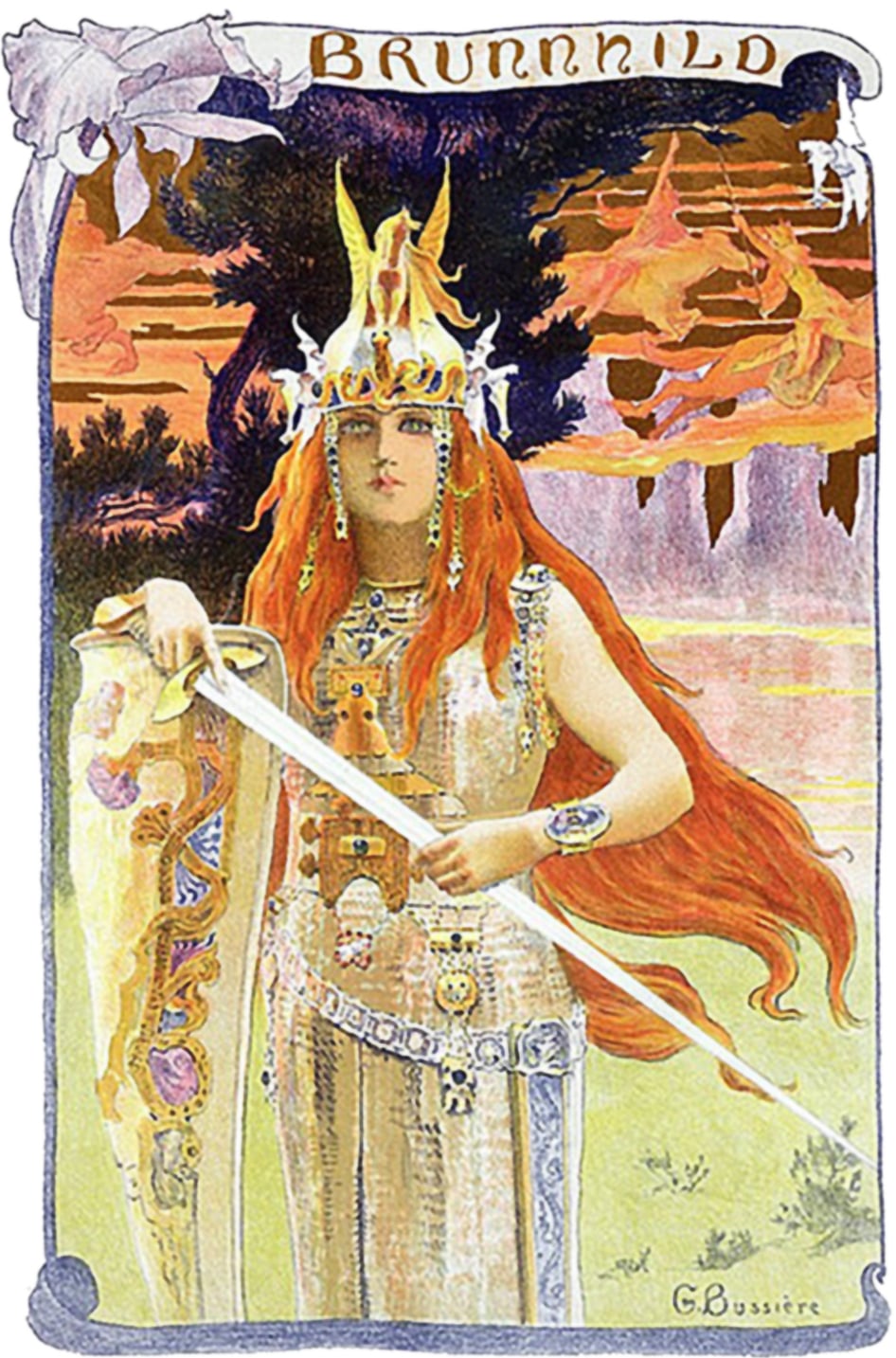
The image of the Viking warrior is usually male, but the surviving evidence leaves room for a more complicated—and more interesting—history. Women in the Viking Age may have fought in battle, though the best-supported conclusion is that they were an unusual minority rather than a standard part of every raiding force. The evidence for Viking women in combat comes from a difficult mix of medieval storytelling, archaeology and modern scientific testing.
Written sources offer tantalizing clues, but few easy answers. The Danish historian Saxo Grammaticus described women who adopted men’s clothing, trained for combat and pursued warfare instead of domestic life in his Gesta Danorum. Another medieval text, the Irish Cogadh Gaedhel re Gallaibh, describes a woman called the Red Lady commanding a Viking fleet during a raid on Belfast. Yet both accounts were written after the events they describe, and Saxo’s warrior women appear mainly in his legendary history rather than in straightforward contemporary reporting.
The strongest archaeological case is the 10th-century grave known as Bj 581, discovered at Birka in Sweden. It contained a sword, axe, spear, armor-piercing arrows, a battle knife, two shields and two horses, along with gaming pieces associated with tactical knowledge—the equipment of an elite warrior. Genetic analysis found no Y chromosome and confirmed that the remains belonged to a woman, making the burial the first securely identified high-ranking female Viking warrior. The original genomic study describes the grave goods as a complete professional warrior’s kit and concludes that the individual was biologically female.
That discovery proves that at least one woman held a warrior’s position, but it does not establish how common the practice was. Archaeologists have identified roughly 30 Viking Age female burials containing weapons, while other graves include spears, axes or knives that might instead reflect hunting, household work or farming. A weapon placed in a grave can signal status, identity or occupation without proving that its owner fought in a pitched battle.
Interpretation has also been shaped by modern assumptions. Male burials containing weapons are often accepted as warrior graves with little argument, while female burials receive additional scrutiny over whether the weapons were symbolic or practical. The Birka study itself became a major turning point because DNA tied the sex of the individual to a burial whose military character was already unusually clear. Independent summaries likewise identify Bj 581 as the first confirmed high-status female Viking warrior.
The most defensible picture, then, is neither that Viking women routinely marched beside men nor that shield-maidens were purely fictional. Some women—probably connected to powerful families and exceptional circumstances—appear to have entered military life. Their careers may have been brief, and their numbers small, but the combination of literary traditions and physical evidence shows that the Viking world’s violence was not exclusively a male domain.
Image Credits
In-Article Image Credits
The Paigan-Icelandic viking warrior queen, Brunhild is seen in this painting holding a sword, with fire and things in the background via Wikimedia Commons by Gaston Bussière with usage type - Public Domain. By Gaston Bussière - [1], Public Domain, https://commons.wikimedia.org/w/index.php?curid=4491753Featured Image Credit
The Paigan-Icelandic viking warrior queen, Brunhild is seen in this painting holding a sword, with fire and things in the background via Wikimedia Commons by Gaston Bussière with usage type - Public Domain. By Gaston Bussière - [1], Public Domain, https://commons.wikimedia.org/w/index.php?curid=4491753


