
Archaeologists have uncovered one of the most unsettling finds yet from Scandinavia’s Iron Age: the skull of a toddler, cut by a sword and later built into the floor of a 2,500-year-old house where people continued to live. The discovery is part of a larger study showing that violence and dead bodies were not confined to battlefields and burial mounds, but seeped into everyday domestic spaces in Iron Age and Viking-age communities.
The child’s remains were found in an Iron Age house near Aalborg in northern Denmark, dated roughly between 500 and 1 B.C. Only the frontal bone of the skull survived, but DNA analysis revealed it belonged to a boy who died between the ages of 2 and 4, with a clear sword cut marking his head. Radiocarbon dating shows the bone is up to two centuries older than the house itself, meaning the skull was kept for generations before being deliberately set into the floor, where residents literally walked over it day after day. For archaeologist Marianne Hem Eriksen of the National Museum of Denmark, that chilling detail signals that this was not a casual disposal of remains but a purposeful act loaded with meaning.
The boy’s skull is one of 192 human bones examined from settlements across modern Denmark, Norway and Sweden in a study published in the Journal of Archaeological Method and Theory. These bones were not recovered from formal cemeteries; instead, they turned up in postholes, pits, floors, wells, houses, yards and feasting halls, suggesting an alternative “domestic” mortuary sphere running alongside more familiar burial traditions. At least 12 individuals in the sample had suffered violent trauma around the time of death, often to the head, with most victims being adult men but also including two women and the child whose skull ended up in the Aalborg floor. The pattern points to a world where interpersonal violence, ritual practice and architecture could all intersect in the same physical space.
Other cases in the study underline just how far that entanglement went. At a Viking Age site dated roughly between 750 and 1050, archaeologists found the skull of a young woman deposited in a well beside a cluster of small houses, bearing damage consistent with blows from a sword or axe before her bones were finally consigned to the water. At Gammel Lejre in Denmark—a royal feasting complex many scholars see as a real-world inspiration for the hall in the Old English epic Beowulf—researchers uncovered a man buried just south of the hall whose skeleton carries multiple blunt-force injuries, several of them healed, testifying to a life of repeated violence in the shadow of elite power. Together, these finds suggest that acts of killing and the handling of corpses were woven into both everyday and high-status spaces, not kept at a safe, sacred distance.
Eriksen’s earlier work on what she terms “body-objects” helps explain why bones like the Aalborg child’s skull might have been curated and built into a house long after death. Studies of Scandinavian sites from the first millennium CE show infants and children deliberately deposited in roof-supporting postholes, wall foundations, pits and wells, often in ways that suggest they were meant to protect the building, mark transitions or serve as offerings rather than simply rest as passive burials. In this framework, parts of the body—skull fragments, jawbones, isolated limbs—could function as potent, animate objects that blurred the line between person and artifact, living and dead. Children, in particular, seem to have held a special, almost magical status, with their remains repeatedly turning up in liminal places like thresholds and water-filled shafts.
For fans raised on glamorized Viking warriors from comics, games and prestige TV, this research adds a grim layer to the setting: these were communities where domestic life might literally be built over curated human remains, including those of children, and where architectural features doubled as portals to the dead. Work on Viking-age childhood has already noted the surprisingly low number of formal child graves and proposed that many young lives were handled differently in death, possibly through alternative burial customs or even infanticide. The new study pushes that conversation further, showing that some children’s bodies—or parts of them—were kept, reused and embedded in living spaces in ways that resemble the darkest horror fiction more than the tidy heroics of saga adaptations. For worldbuilders, RPG designers and horror storytellers mining the Viking Age for inspiration, the message is clear: the real archaeology points to a world where the line between home and grave, ritual and everyday life, was far more disturbingly thin than pop culture usually admits.
Image Credits
In-Article Image Credits
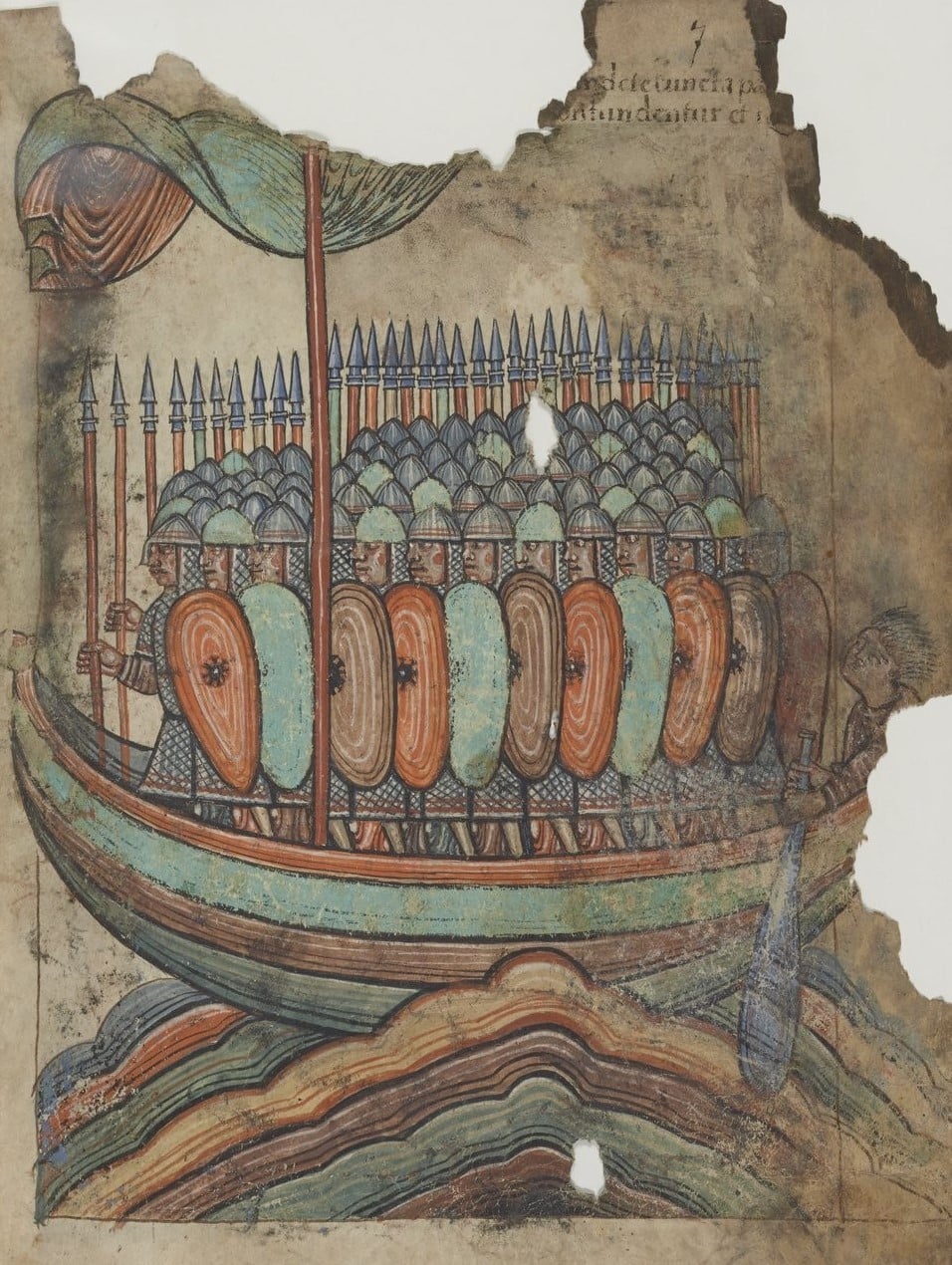
Viking attack on Guérande via Wikimedia Commons by Abbey of Saint-Aubin with usage type - Public Domain. circa 1100Featured Image Credit
Viking attack on Guérande via Wikimedia Commons by Abbey of Saint-Aubin with usage type - Public Domain. circa 1100


