
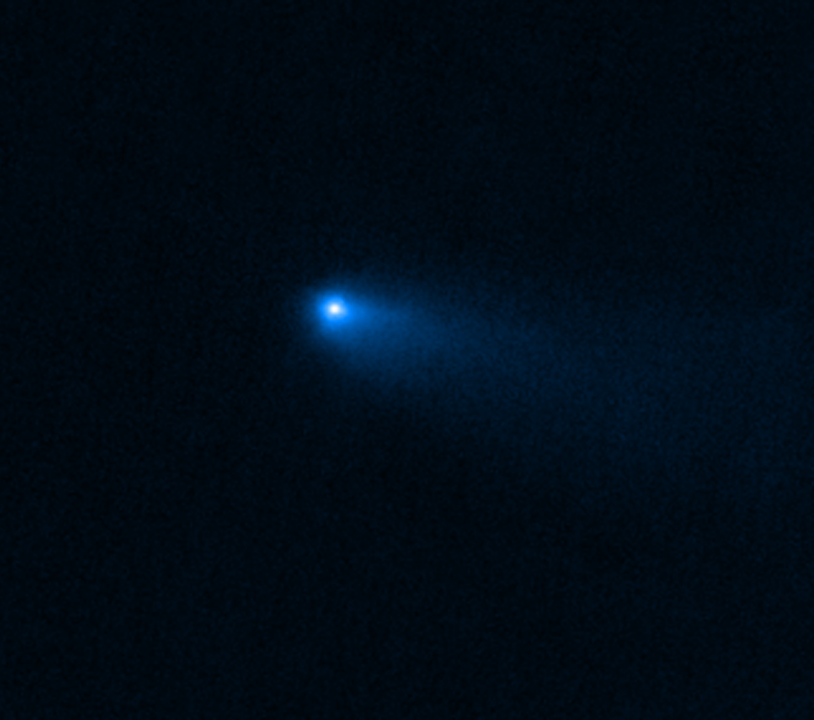
Comets may carry the ingredients associated with life, but that does not mean they could deliver those ingredients safely to Earth. A new Cambridge-led study concludes that comet impacts were probably too fast, steep, and destructive to supply the concentrated chemical stockpile needed for life to emerge. The findings challenge the idea that comets seeded early Earth with a steady supply of prebiotic molecules.
Published in Scientific Reports as Cometary impacts an unlikely pathway towards the origins of life on Earth, the research was led by Richard J. Anslow of the University of Cambridge’s Institute of Astronomy. The team combined models of short-period comet dynamics with simulations of atmospheric entry and high-speed impacts, examining whether fragile organic compounds could reach Earth’s surface in useful quantities. The researchers describe successful delivery as an exceedingly rare event.
The analysis focused especially on hydrogen cyanide, or HCN, a simple molecule made from hydrogen, carbon, and nitrogen. HCN is important to origin-of-life research because it can participate in chemical pathways that produce more complex compounds. The problem is that a comet carrying HCN would arrive with enormous kinetic energy. Atmospheric heating and the impact itself would usually destroy the molecule before it could accumulate in a pond, ocean, or other environment where prebiotic chemistry might proceed. Independent coverage of the study likewise emphasizes the role of comet speed and entry angle.
That does not make cometary delivery physically impossible. Under unusually favorable conditions, some molecules might survive, but the simulations suggest the timing and quantities would have to line up with extraordinary precision. The paper therefore pushes back against a popular version of panspermia—not the claim that life itself arrived from space, but the narrower proposal that comets supplied Earth with enough raw material to get biology started. The Cambridge repository summarizes the central issue as the inability of Earth’s cometary bombardment to provide a concentrated reservoir of feedstock molecules.
The result also reframes the role of other space rocks. Asteroids struck the young Earth more frequently than comets, and the pressure and heat generated by those impacts may have helped manufacture amino acids and other useful compounds rather than simply destroying them. Laboratory and modeling work has previously explored whether compressed cometary ices can generate amino-acid-like chemistry during impacts, so the new study does not erase every possible connection between impacts and life; it questions whether intact comet-borne molecules were the main delivery mechanism.
Mars fares slightly better in the simulations, though “better” remains a very low bar. Its atmospheric and impact conditions could make successful cometary transfer marginally more plausible, but the study does not show that Mars received life’s ingredients—or that life ever developed there. For Earth, the remaining possibilities include asteroid-driven chemistry and reactions generated locally by the atmosphere, oceans, lightning, ultraviolet radiation, and minerals. The origin-of-life mystery is therefore still wide open; the new work mainly removes one especially romantic explanation from the front rank of contenders.


