
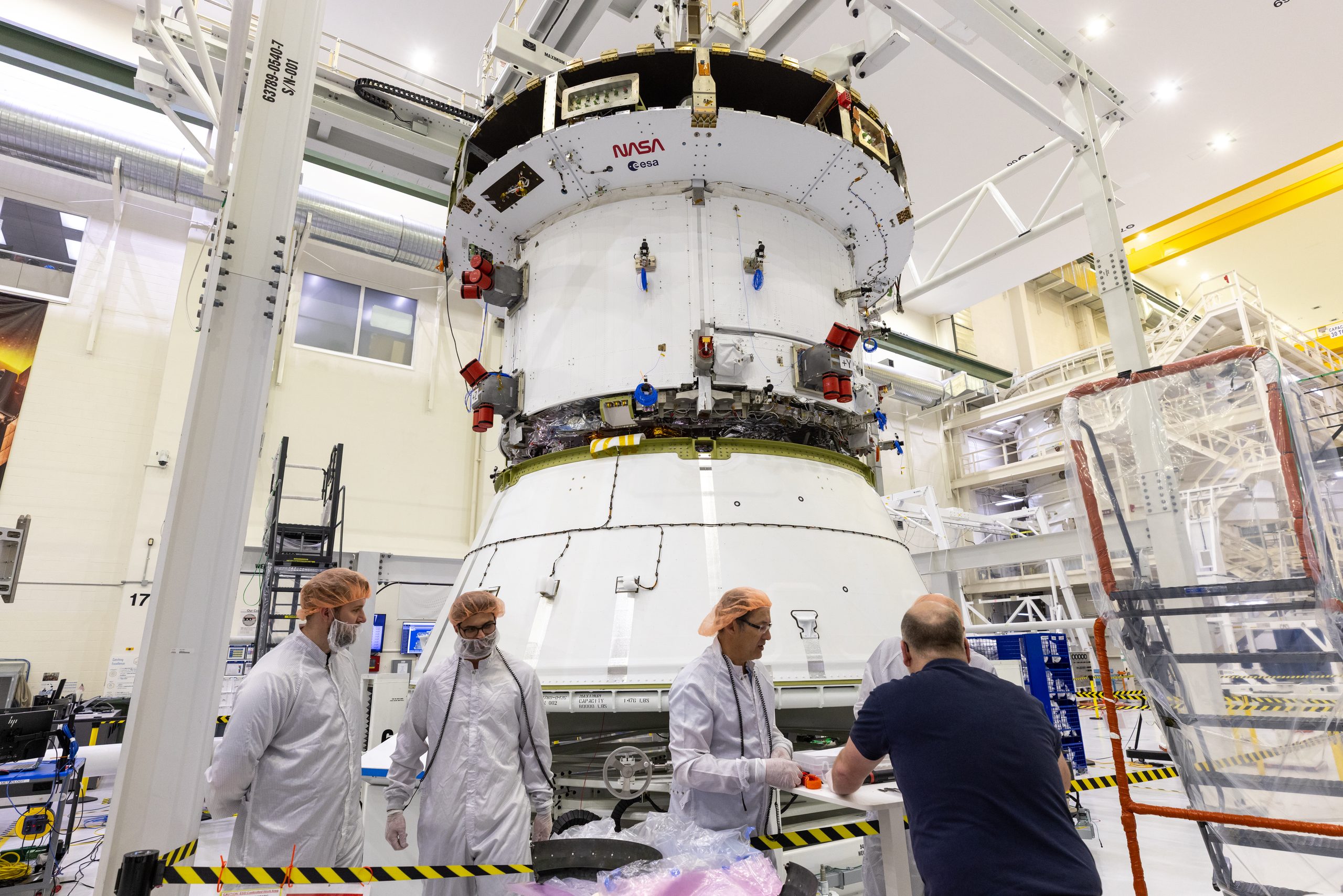
NASA is turning its next Moon shot into a high-stakes dress rehearsal. The agency now plans to use a 2027 crewed orbital mission to test commercial landers and prepare for an Artemis lunar landing targeted for 2028, an accelerated strategy detailed in NASA’s new Moon-return plan.
The revised architecture splits the work between Artemis III and Artemis IV. Rather than sending astronauts directly to the lunar surface during the 2027 mission, Artemis III will send a four-person crew aboard Orion into low Earth orbit. There, astronauts and flight controllers will practice rendezvous, docking, habitation, communications, life-support integration, and propulsion procedures with test versions of landers developed by SpaceX and Blue Origin. NASA describes the mission as a roughly 14-day demonstration designed to expose problems before a lunar landing attempt. NASA’s Artemis III mission outline identifies astronauts Randy Bresnik, Frank Rubio, Andre Douglas, and European Space Agency astronaut Luca Parmitano as the crew.
The two companies are taking markedly different routes to the Moon. SpaceX’s Starship lunar lander is expected to depend on multiple launches and propellant transfer in Earth orbit before carrying Orion and its crew toward the lunar environment. Blue Origin’s Blue Moon Mark 2 lander, meanwhile, is being paired with three transfer stages for the accelerated 2028 mission, avoiding the need for the lander to demonstrate propellant transfer before the first crewed landing. NASA says each vehicle will use orbital operations tailored to its own design rather than forcing both systems into an identical flight profile. The agency’s lander-development update lays out those changes.
Artemis IV is the mission intended to put astronauts on the lunar surface. The crew would launch from Florida aboard NASA’s Space Launch System rocket and travel in Orion before transferring to a commercial human landing system. The destination is the Moon’s south-polar region, where permanently shadowed terrain may preserve water ice and where difficult lighting, communications, and thermal conditions will make the landing more demanding than a repeat of the Apollo-era missions. NASA’s latest Artemis overview says both SpaceX and Blue Origin are working toward supporting a crewed landing in 2028.
The plan also gives NASA a chance to validate new lightweight spacesuits and the operational choreography needed for sustained lunar missions before attempting a permanent presence. The orbital test is particularly important because the landers will need to rendezvous with Orion, support astronauts during transfers, and operate as part of a larger transportation system rather than as isolated spacecraft.
That makes 2027 the key pressure point. A successful demonstration could clear the way for the 2028 landing while giving NASA two commercial options instead of relying on a single provider. The approach is ambitious, however: it depends on launch cadence, complex orbital maneuvers, lander readiness, and the ability to integrate systems that are still being developed. If those pieces hold together, Artemis IV would be more than a symbolic return—it would be the opening move in NASA’s longer-term effort to establish a repeatable lunar campaign and build experience for eventual human missions to Mars.


