
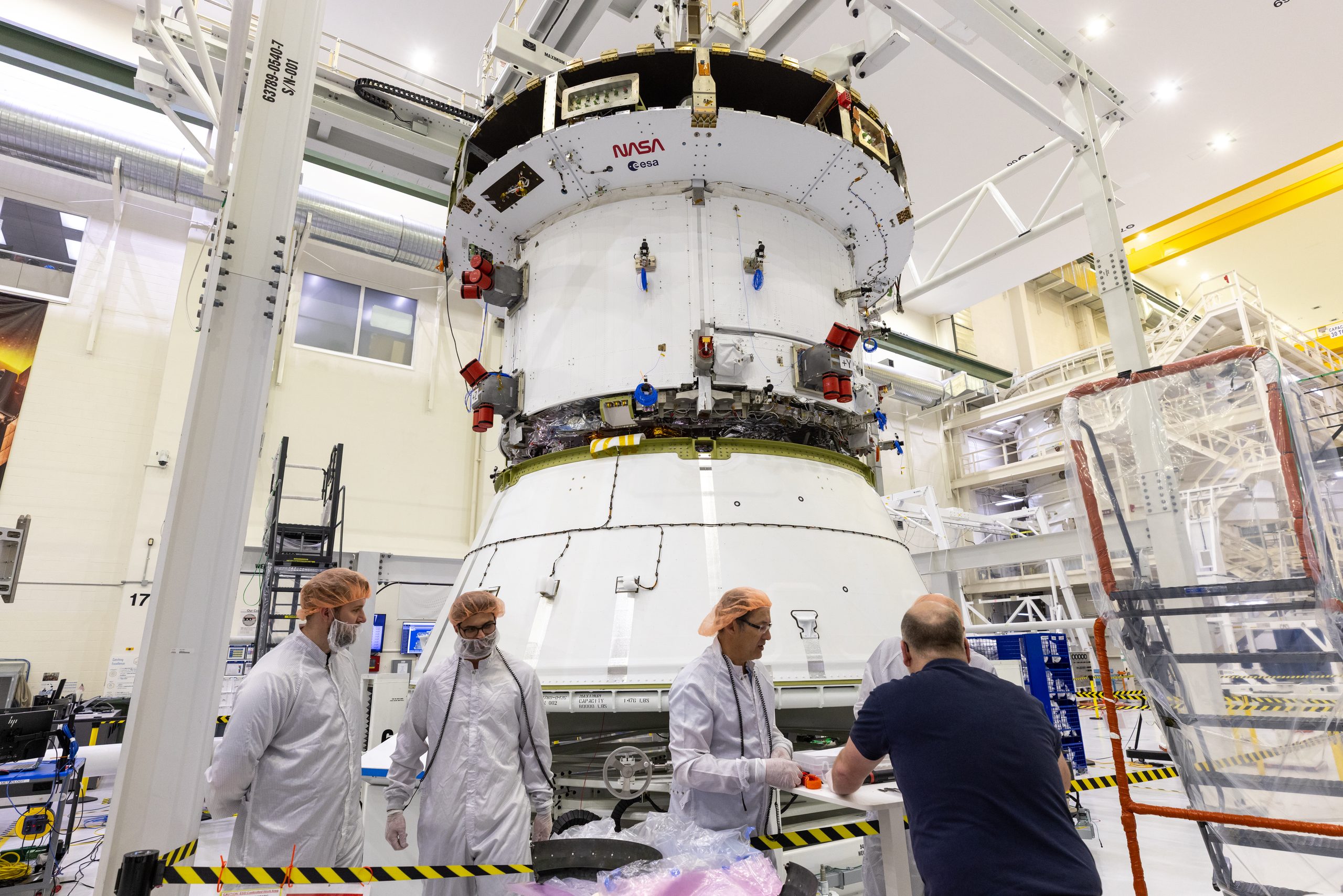
NASA’s Artemis program could receive a major budget acceleration as the White House asks Congress to raise its annual funding rate by $2 billion, a move designed to push the United States’ return to the Moon ahead of an increasingly ambitious Chinese lunar effort. The request appears in a list of proposed funding exceptions for the next stopgap spending measure, rather than as an immediate standalone appropriation. The proposed Artemis increase would lift the program’s annualized funding from roughly $7.8 billion to $9.8 billion.
The administration’s budget document describes the money as support for a “higher rate of operations.” More specifically, the request would help NASA accelerate supply chains and modernize in-house manufacturing for spacesuits, thrusters, Space Launch System hardware, lunar habitats, and astronaut safety systems. The official request says the extra funding is needed to prevent schedule slippage and preserve other national-space priorities. The funding anomaly document also argues that NASA needs the ability to produce complex, low-volume components domestically rather than relying entirely on vulnerable or crowded suppliers.
That urgency reflects the fragile state of the Artemis schedule. A recent Congressional Research Service overview identifies Artemis IV as the mission intended to achieve the first crewed lunar landing since 1972, with NASA currently targeting 2028. The same analysis notes that NASA’s human-landing-system contractors have faced technical and scheduling problems, while changes across several Artemis projects could affect cost, scope, and delivery dates.
The geopolitical clock is moving as well. China has publicly set a goal of landing astronauts on the Moon before 2030, and its robotic exploration program is building toward longer-term activity around the lunar south pole. Recent coverage of China’s lunar plans describes a sequence of uncrewed missions leading toward a crewed landing, while NASA’s own timetable aims to put American astronauts on the surface in 2028.
For NASA, the proposed boost is less a promise of an instant Moon landing than an attempt to buy schedule certainty. Extra money could help stabilize production and speed work on hardware already under development, but it will not erase engineering risks, contractor delays, or the congressional negotiations surrounding the continuing resolution. Congress must still approve the requested exception, and lawmakers could alter the amount or attach conditions.
If enacted, the increase would give Artemis its clearest financial push yet as the United States and China pursue overlapping lunar ambitions. It could mean faster hardware production and more resilience across NASA’s supply chain, but the result fans are watching for remains unchanged: whether Artemis can turn a 2028 target into an actual crewed landing before China reaches the Moon.


