
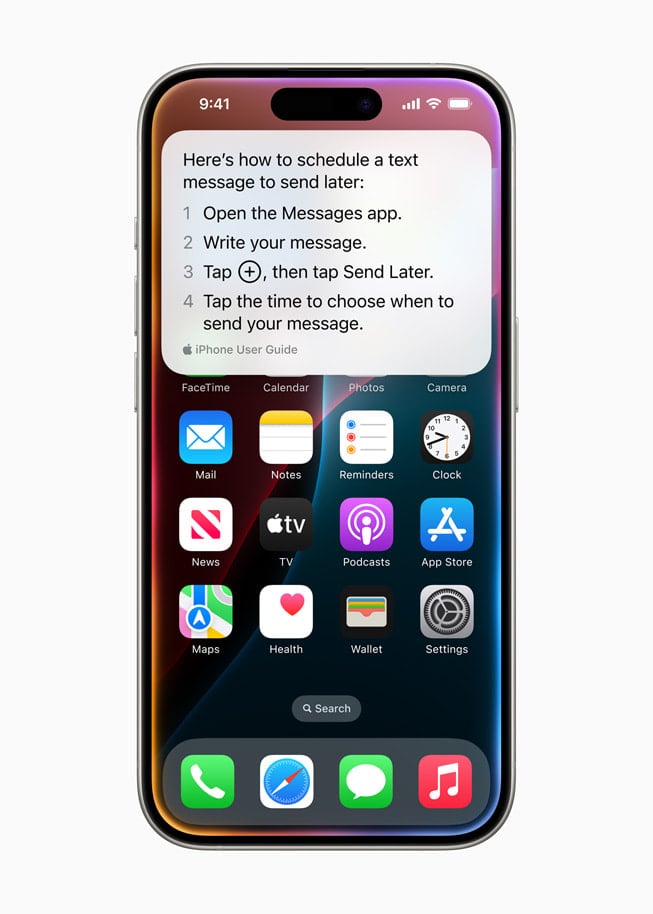
Apple is pushing Siri toward a much more ambitious future: an assistant that can take a goal, work through multiple steps, and keep moving without requiring a fresh voice command at every turn. CEO John Ternus is reportedly pressing software chief Craig Federighi to speed up that effort, as Apple tries to close the gap with newer AI agents from OpenAI and Meta. Apple’s next Siri push could make the assistant feel less like a voice-controlled menu and more like an active digital helper.
The first stage is expected to focus on Apple’s own software. Siri could gain finer control over apps such as Photos and Safari, including actions like cropping or rotating images and organizing browser tabs. Those upgrades are reportedly aimed at iOS 27.3, with some features potentially arriving as soon as December. A broader expansion into third-party apps may follow in the spring, although Apple has not announced a public release schedule.
That work builds on the revamped Siri features now available through Apple Intelligence. Apple describes the updated assistant as offering personal-context understanding, onscreen awareness, and broader conversational knowledge, while its official Siri page highlights deeper assistance inside apps including Photos, Messages, and Safari. Apple’s current Siri overview presents those capabilities as a foundation for more meaningful app interactions rather than the final destination.
The bigger change would be Siri’s ability to pursue ongoing objectives. Instead of asking the assistant to complete every individual action, a user might hand over a broader job and let Siri determine what needs to happen next. That is the same general direction associated with OpenAI’s Dots and Meta’s Muse, which are described as systems capable of tracking goals and continuing work with less supervision. Apple is reportedly considering that kind of agentic behavior for Siri as early as 2027, but the timing remains an internal target rather than a confirmed launch promise.
Federighi’s role makes the timetable especially significant. After Apple’s AI leadership structure changed, he became the executive overseeing the company’s software and artificial-intelligence push. Recent coverage of Apple’s strategy says he delivered a functional AI-enhanced Siri on an unusually compressed schedule, but the company still sees its assistant as trailing rivals that have moved faster on autonomous task completion. Additional reporting on the Siri roadmap likewise characterizes the more agent-like version as a possibility for next year, not a firm product commitment.
Apple’s challenge will be balancing initiative with the privacy and security expectations that define its platform. During Apple’s recent earnings discussion, Ternus reportedly called agentic capabilities promising while emphasizing that users must understand what access they are granting. For fans, the practical test will be whether Siri can reliably complete useful multi-step tasks without becoming unpredictable, intrusive, or difficult to control.


