
Apple’s desktop lineup has quietly turned into one of the most coveted playgrounds for local and agentic AI, and 2026’s Mac mini, Mac Studio, and iMac each chase a different kind of geek fantasy. Putting the right M-series silicon on your desk now matters as much as your GPU did in a gaming rig a few years ago, especially if you plan to run serious local models instead of relying entirely on the cloud.
At the entry end sits the refreshed Mac mini, now offered in a mainstream M6 configuration and a beefier M5 Pro build that brings Thunderbolt 5 and higher-core silicon to Apple’s tiniest desktop box. It remains Apple’s smallest and most affordable desktop, but because it ships without a display, keyboard, or mouse, it’s particularly appealing to anyone who already owns a good monitor or is piecing together a modular battlestation. Multiple buying guides note that the Mac mini delivers strong value for coding, general productivity, and moderate creative work, with configurations topping out at around 64 GB of unified memory—enough for lighter-weight local AI models and development workflows.
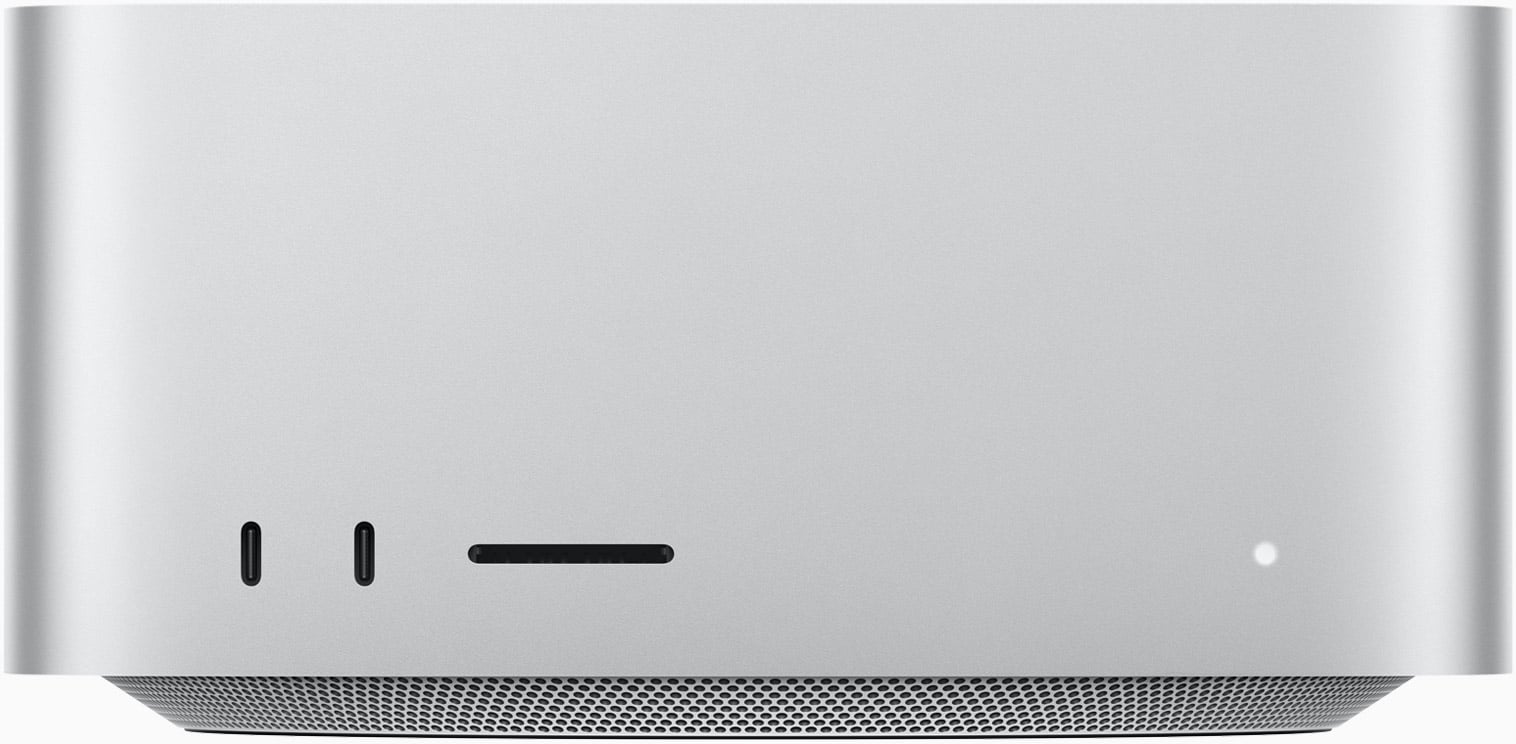
Step up to the Mac Studio and you’re firmly in workstation territory, with 2026 models configurable with M5 Max or M5 Ultra chips that turn the compact chassis into a dense block of compute. Apple’s own specs highlight an 18‑core CPU and up to a 40‑core GPU in the M5 Max version, plus Neural Accelerators baked into every GPU core, all tied to as much as 128 GB of unified memory—exactly the kind of profile that excites anyone experimenting with large local language models or high-end AI-assisted content creation. Reviewers at Wired, Macworld, and AppleInsider converge on the same point: if you need more than 64 GB of RAM, a substantially stronger GPU, 10Gb Ethernet, and support for up to five external displays, the Mac Studio quickly becomes the obvious choice despite its higher starting price.
The iMac, still anchored to an M4 chip in its current 24‑inch form, plays a different role entirely, targeting users who care more about a clean all‑in‑one aesthetic than raw AI throughput. The base configuration pairs that older processor with 16 GB of memory and a 256 GB SSD, which is fine for everyday macOS apps, media consumption, and light creative work but starts to feel tight if you want to juggle big local models or large game-development projects. Testing from outlets like Wirecutter underscores that the iMac’s minimal ports and reliance on USB‑C can force users into a mess of dongles and hubs if they try to hang multiple peripherals off the back, eroding some of the simplicity the all‑in‑one form factor promises.
The interesting wrinkle in 2026 is how agentic AI reshapes those familiar recommendations: suddenly, GPU cores, memory ceilings, and neural acceleration are not just “pro” features but everyday considerations for tinkerers running local copilots, homebrew NPC brains, and offline code assistants. Benchmarks comparing an M5 Pro Mac mini to an M5 Max Mac Studio show near‑parity in multicore CPU performance but roughly three‑quarters higher GPU scores for the Studio, which becomes crucial once you start leaning on GPU‑accelerated inference and complex creative workloads. That’s why many desktop buyer’s guides now position the Mac mini as the sweet spot for coders and indie creators who want strong performance on a budget, while reserving the Mac Studio for sustained video, 3D, and AI tasks that can fully exploit its additional GPU cores, media engines, and memory bandwidth.
For most geeks, the decision in 2026 comes down to how far you plan to push local AI and how much you value modularity over simplicity. If you already own a good display and mostly live in code editors, office apps, and lighter AI tools, a well‑specced M6 or M5 Pro Mac mini is the budget-friendly pick that still feels fast for years. If you want to treat your desktop like a personal AI lab or a serious content workstation—with multiple 4K or 5K displays, heavy GPU workloads, and large models running on-device—the M5 Max or M5 Ultra Mac Studio is the clear winner, even before you start thinking about future-proofing. The iMac, meanwhile, remains the stylish all‑in‑one for households, classrooms, and casual users, but in this new agentic AI era, it’s the Mac you buy for its looks and simplicity, not because it’s the best tool for pushing the bleeding edge of what those M‑series chips can do.


