
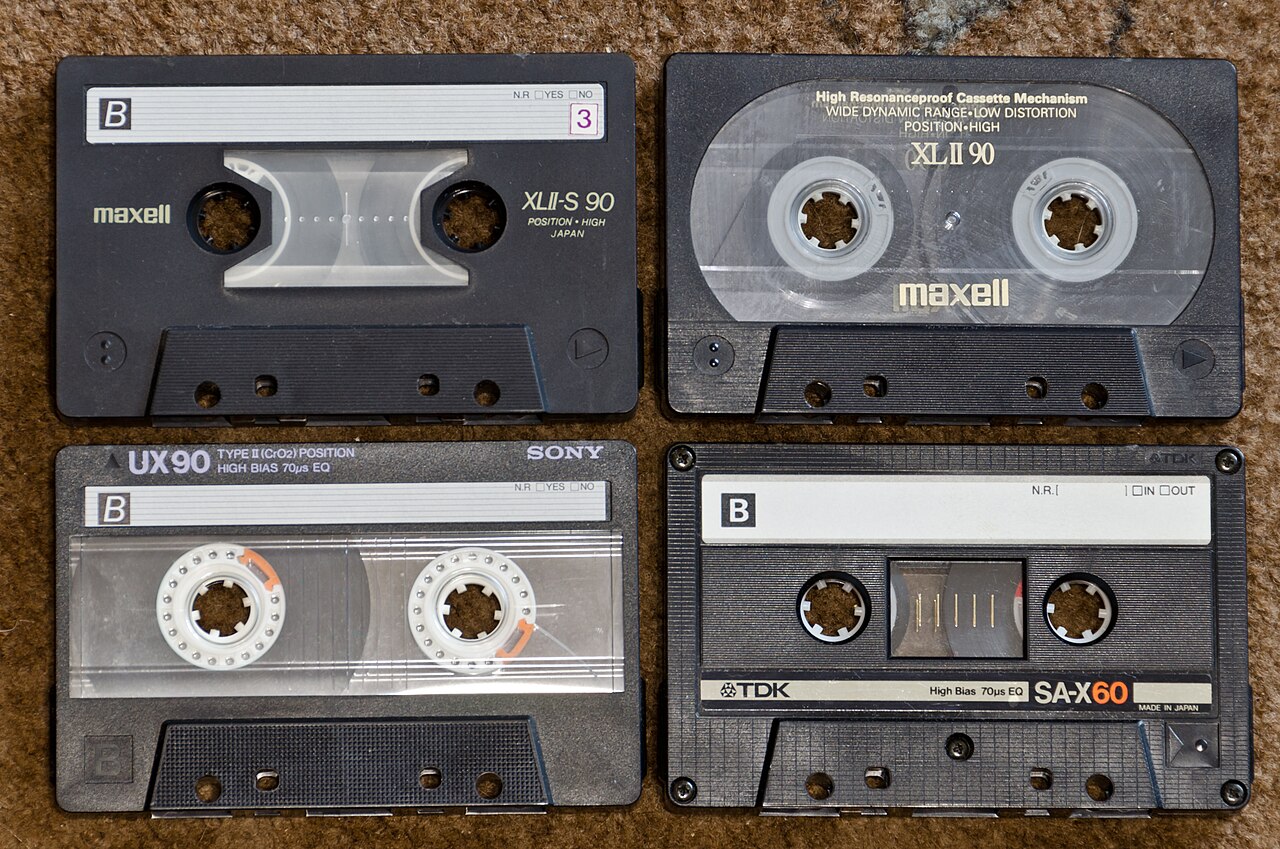
Your old cassette mixtapes might have more life left in them than you think, but their future depends almost entirely on how they’ve been stored and used over the years. Recent coverage has pulled together archival research and preservation guidelines to suggest a typical lifespan of around 30 years for audio cassettes under good conditions, with many tapes remaining playable for several decades beyond that. Under the right circumstances, some experts now argue that well-cared-for cassettes could theoretically endure close to a century before becoming unlistenable, while badly stored tapes can fail in as little as five years.
Most of the hard numbers on cassette longevity come from studies on magnetic tape used in libraries and archives, which share the same basic construction as consumer audio cassettes. A widely cited preservation model from the Commission on Preservation and Access and CLIR estimates a life expectancy of about 30 years for magnetic tape stored at roughly 20°C (68°F) and 50 percent relative humidity, assuming the tape and recording are in good shape to begin with. Raise the temperature to around 25°C (76°F) at the same humidity and the projected lifespan drops to roughly 10 years; push humidity toward 80 percent and the estimate collapses to around five years. Earlier thinking often pegged cassette life at 10 to 30 years, but newer syntheses of lab work and field experience now suggest many cassettes can stay playable for 30 to 60 years if stored well, with the upper range reserved for higher-quality stock and minimally used tapes. Some consumer-facing preservation guides go further, suggesting that in ideal, stable environments, a subset of tapes might survive close to 100 years before chemical breakdown and physical wear render them unusable.
Those “ideal conditions” are not exotic cold vaults so much as consistently cool, dry, and stable spaces far from household extremes. Library and archive guidelines typically recommend storage temperatures in roughly the mid-60s Fahrenheit (around 18–21°C) with relative humidity between 40 and 50 percent, a range that slows chemical deterioration without inviting mold. Consumer-oriented advice often broadens that window slightly, suggesting roughly 59 to 73°F and about 25 to 55 percent humidity as an acceptable target for home collections, provided fluctuations are kept to a minimum. What everyone agrees on is what to avoid: attics and garages that swing from freezing to sweltering, direct sunlight, radiators, and any damp basement corner that smells musty. Archivists and transfer specialists also warn that tapes should be kept away from loudspeakers, motors, and other sources of strong magnetic fields, which can gradually erase or distort recordings over time.
How you physically store and handle your tapes matters almost as much as the climate around them. Preservation guides recommend shelving cassettes upright like books rather than stacking them flat, because tall piles can deform the shells and add uneven pressure to the tape packs at the bottom. Keeping tapes in their original plastic cases adds another layer of protection against dust, accidental impacts, and exposure to airborne pollutants that can accelerate binder decay or encourage mold growth. Many tape specialists advise fully rewinding a cassette before putting it away so the tape sits evenly on one hub, rather than leaving the oxide-coated plastic parked under tension in the middle of the reel. On the mechanical side, documentation on cassette life cycles suggests cheaper, lower-quality formulations may only offer around 10 years of reliable playback under average use, while better-made tapes can endure repeated plays for several decades if the player itself is well maintained. Frequent playback, misaligned decks, and dirty tape paths can dramatically shorten functional lifespan, even when storage conditions are otherwise decent.
The renewed interest in analog media across music and geek culture—think boutique cassette releases of indie game soundtracks, vaporwave albums mastered straight to tape, and nostalgia-heavy “retro” mixtapes—makes these preservation questions more than academic. Enthusiasts picking up vintage Walkmans and digging old shoeboxes of tapes out of storage are discovering that some cassettes still sound surprisingly good after decades, while others have succumbed to dropouts, squealing, or sticky-shed–style issues that make them difficult or impossible to play. Preservation groups and digitization services emphasize that even if a cassette seems fine now, the chemistry that keeps the oxide layer bonded to the plastic base will continue to break down over time, and there is no way to permanently halt that process—only slow it. Once a tape starts shedding heavily, warping, or growing mold, rescuing the audio becomes significantly harder and sometimes prohibitively expensive, especially for home collections.
For anyone sitting on a box of irreplaceable recordings—whether that’s a bootleg game soundtrack taped off late-night radio or a long-lost band rehearsal—archivists tend to agree on a pragmatic strategy: stabilize, then digitize. The stabilization part means moving tapes into the main living area of a home where temperature and humidity are relatively controlled, keeping them off the floor, away from exterior walls, and out of direct sun, then storing them upright in cases away from speakers, motors, and strong magnets. Digitizing, whether via a decent-quality home deck and audio interface or professional transfer service, creates a copy that’s immune to the physical failure modes of magnetic tape, while letting you keep the original cassette as a tangible artifact for as long as it survives. With that combination of sensible storage and timely copying, the consensus from archivists and preservationists is that many cassettes will remain playable for decades to come—but the window to capture what’s on them is slowly closing.
Image Credits
In-Article Image Credits
Compact Cassettes Cassette Tapes via WIkimedia Commons by Jacek Halicki with usage type - Creative Commons LicenseFeatured Image Credit
Compact Cassettes Cassette Tapes via WIkimedia Commons by Jacek Halicki with usage type - Creative Commons License


