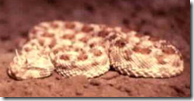
Horned desert viperCerastes cerastes Description: Pale buff color with obscure markings and a sharp spine (scale) over each eye. Characteristics: As with all true vipers that live in the desert, it finds refuge by burrowing in the heat of the day, coming out at night to feed. It is difficult to detect when buried; therefore,…
Tag: animals
A wide range of topics related to the animal kingdom. From domesticated pets to exotic wildlife, readers will find informative and engaging articles about these fascinating creatures. Articles may focus on animal behavior, habitats and ecosystems, breeding and reproduction, conservation efforts, and much more.
Habu pit viper – how to identify, avoid their habitat, and treatment for their bite.
Habu pit viperTrimeresurus flavoviridis Description: Light brown or olive-yellow with black markings and a yellow or greenish-white belly. Characteristics: This snake is responsible for biting many humans, and its bite could be fatal. It is an irritable species ready to defend itself. Its venom is hemotoxic, causing pain and considerable tissue damage. Habitat: Found in…
Green tree pit viper snake – how to identify, avoid their habitat, and treatment for their bite.
Green tree pit viperTrimeresurus gramineus Description: Uniform bright or dull green with light yellow on the facial lips. Characteristics: A small arboreal snake of some importance, though not considered a deadly species. It is a dangerous species because most of its bites occur in the head, shoulder, and neck areas. It seldom comes to the…
Green mamba snake – how to identify, avoid their habitat, and treatment for their bite.
Green mambaDendraspis angusticeps Description: Most mambas are uniformly bright green over their entire body. The black mamba, the largest of the species, is uniformly olive to black. Characteristics: The mamba is the most dreaded snake species of Africa. Treat it with great respect. It is considered one of the most dangerous snakes known. Not only…
Gaboon viper snake – how to identify, avoid their habitat, and treatment for their bite.
Gaboon viperBitis gabonica Description: Pink to brown with a vertebral series of elongated yellowish or light brown spots connected by hourglass-shaped markings on each side. It has a dark brown stripe behind each eye. This dangerous viper is almost invisible on the forest floor. A 1.8-meter-long (6-foot-long) Gaboon viper could weigh 16kilograms (35 pounds). Characteristics:…
Habu Pit Viper snake – how to identify, avoid their habitat, and treatment for their bite.
Habu Pit ViperNaja haje Description: Yellowish, dark brown, or black uniform top with brown cross-bands. Its head is sometimes black. Characteristics: It is extremely dangerous. It is responsible for many human deaths. Once aroused or threatened, it will attack and continue the attack until it feels an escape is possible. Its venom is neurotoxic and…
Cobra snake – how to identify, avoid their habitat, and treatment for their bite.
Common cobra or Asiatic cobraNaja naja Description: Usually slate gray to brown overall. The back of the hood may or may not have a pattern. Characteristics: A very common species responsible for many deaths each year. When aroused or threatened, the cobra will lift its head off the ground and spread its hood, making it…
Bush viper snake – how to identify, avoid their habitat, and treatment for their bite.
Bush viperAtheris squamiger Description: Often called leaf viper, its color varies from ground colors of pale green to olive, brown, or rusty brown. The viper uses its prehensile tail to secure itself to branches. Characteristics: An arboreal species that often comes down to the ground to feed on small rodents. It is not aggressive, but…
Boomslang snake – how to identify, avoid their habitat, and treatment for their bite.
BoomslangDispholidus typus Description: Coloration varies but is generally green or brown, which makes it very hard to see in its habitat. Characteristics: Will strike if molested. Its venom is hemotoxic; even small amounts cause severe hemorrhaging, making it dangerous to man. Habitat: Found in forested areas. It will spend most of its time in trees…
Ursini’s viper snake – how to identify, avoid their habitat, and treatment for their bite.
Ursini’s viperVipera ursinii Description: The common adder, long-nosed adder, and Ursini’s viper basically have the same coloration and dorsal zigzag pattern. The exception among these adders is that the common adder and Ursini’s viper lack the projection of tiny scales on the tip of the nose. Characteristics: These little vipers have an irritable disposition. They…